We often think of eye diseases as things we can easily feel or notice. We expect pain, obvious redness, or a sudden change in our sight to warn us that something is wrong.
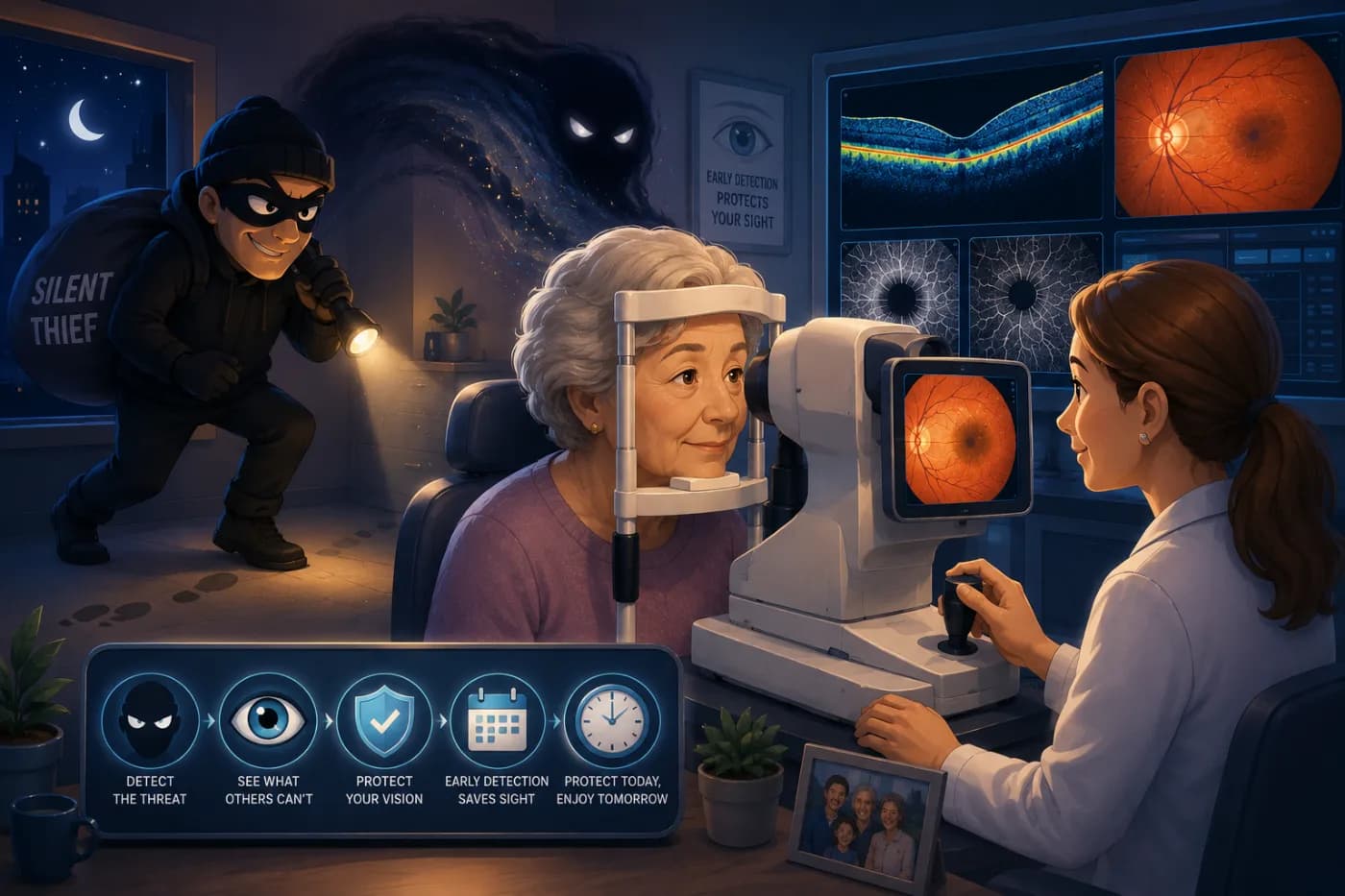
But in the world of ophthalmology, some of the most dangerous conditions are entirely silent. Age-related macular degeneration (AMD) is a prime example. In its early and intermediate stages, dry AMD can slowly damage your retina without causing a single symptom. By the time you notice a dark spot or a wavy line in your vision, significant and sometimes irreversible damage has already occurred.
At KSA Vision Clinic, our mission is to catch these silent changes long before they impact your life. Let's explore the technology that acts as the guardian of your sight, and look at the simple daily habits that keep your eyes healthy.
The Super-Microscope: Demystifying OCT Imaging
How do eye doctors look at something as thin and delicate as the retina? The answer is advanced technology called Optical Coherence Tomography (OCT).
If a standard eye exam is like looking at the surface of a frozen lake, an OCT scan is like taking a high-definition, 3D cross-sectional slice of the ice to see what lies beneath.
How it works: In less than a minute, and without even touching your eye, the OCT scanner projects safe, gentle waves of light into your pupil.
The result: It measures the reflections of this light to generate a detailed, microscopic map of the retina's individual layers. It can capture details that are thinner than a single strand of human hair.
What we see: The scan allows eye care professionals to see the very first signs of macular thinning, spot microscopic fluid leaks in wet AMD, or count tiny waste deposits (drusen) before they can blur your sight.
Technology is moving so fast that clinical practice is starting to adopt even more advanced tools. For example, a device called SCANLY Home OCT was recently authorized—the first-ever patient-operated home OCT device that uses artificial intelligence to help patients monitor their eyes between clinic visits.
Another recent innovation is the Valeda Light Delivery System, a non-invasive tabletop light therapy device authorized to treat intermediate dry AMD, stimulating repair in retinal cells using specific wavelengths of light.
Taking Control: What You Can Do for Your Retina
While high-tech imaging is a strong defense, there are powerful actions you can take in your daily life to protect your macula. Think of these as your personal shield against AMD:
The Single Most Important Choice: Smoking Cessation
If there is one thing you can do today to protect your eyes, it is to stop smoking. Smoking is the most significant modifiable lifestyle risk factor for developing macular degeneration. Smoking damages the delicate blood vessels that supply the retina with oxygen, speeding up cell death in the macula. Quitting is a direct way to lower your risk.
Feed Your Eyes: The Power of Nutrition
Your eyes have a very high metabolic rate, meaning they burn energy quickly and require rich nutrition to stay healthy.
The Mediterranean Diet: Eating a diet rich in leafy green vegetables (like spinach and kale), colorful fruits, and fish high in omega-3 fatty acids (like salmon) supports excellent blood-vessel health in the back of the eye.
The AREDS2 Shield: For individuals who already show signs of intermediate dry AMD, clinical trials have proven that a highly specific formula of vitamins and minerals—known as AREDS2—can significantly slow down the progression of the disease. While it doesn't cure or prevent the initial onset of AMD, it is a scientifically proven way to defend a vulnerable macula.
Why Proactive Care Matters
Many people assume that if their glasses prescription is up to date, their eyes are perfectly healthy. But as we have learned, a standard sight test only checks how well your lens focuses light—not whether your retinal sensor is healthy.
If you are over the age of 50, or if you have a family history of macular degeneration, waiting for symptoms to appear is a risky strategy. By making comprehensive, high-tech eye examinations a regular part of your health routine, you ensure that silent changes are caught and managed early.
At KSA Vision Clinic, we combine advanced diagnostic technology with a deep, patient-first approach. Let us help you protect the vibrant details of your world.