The Clean-Up Crew: How Keto and Fasting Help Your Eyes Stay Fresh and Healthy
Have you ever wondered what happens to your eyes when you sleep, rest, or go without food for a while?
Our eyes are a lot like a busy restaurant kitchen. To help us see, they have to work constantly, burning a huge amount of energy. But just like any busy kitchen, they also generate a lot of trash and cellular waste. If this waste is not cleaned up regularly, it can pile up and harm our vision.
To prevent this, our eyes have a built-in "clean-up crew" that sweeps up the trash and keeps everything running smoothly. Scientists are discovering that lifestyle habits like fasting and a ketogenic diet can act as a powerful "on" button for this microscopic cleaning process.
The Daily 10% Waste
The light-detecting cells at the back of our eyes—called rods and cones—face a constant storm of bright light and oxygen. This intense environment causes their outer tips to wear out and get damaged very quickly.
To survive this wear and tear, our eyes do something remarkable: the rods and cones shed their oldest, most damaged parts—about 10% of their total length—every single morning.
If this old material were left to pile up, it would act like biological garbage, blocking light and eventually leading to vision loss. This is where a single layer of support cells, called the Retinal Pigment Epithelium (RPE), comes to the rescue.
The RPE cells. They act like microscopic vacuum cleaners. Through a process called phagocytosis (which literally means "cell eating"), they engulf, digest, and recycle the damaged tips that the rods and cones shed.
Inside these cells, there is also another recycling system called mitophagy, which specifically targets and clears out old, tired mitochondria (the tiny power plants that supply energy to our cells).
How Keto and Fasting Turn on the Clean-Up Crew
For our cells to clean themselves efficiently, they need the right signals. In our everyday lives, when we eat carbohydrates regularly, our cells are flooded with sugar (glucose). This keeps a molecular sensor called mTOR turned on, which tells the cells to focus on growth and ignore cleaning.
When we fast (go without food for a short period) or follow a ketogenic diet (which is very low in carbs and high in healthy fats), our blood sugar levels drop and remain stable. This tells the mTOR sensor to rest, sending a clear message to our cells: it is time to clean up.
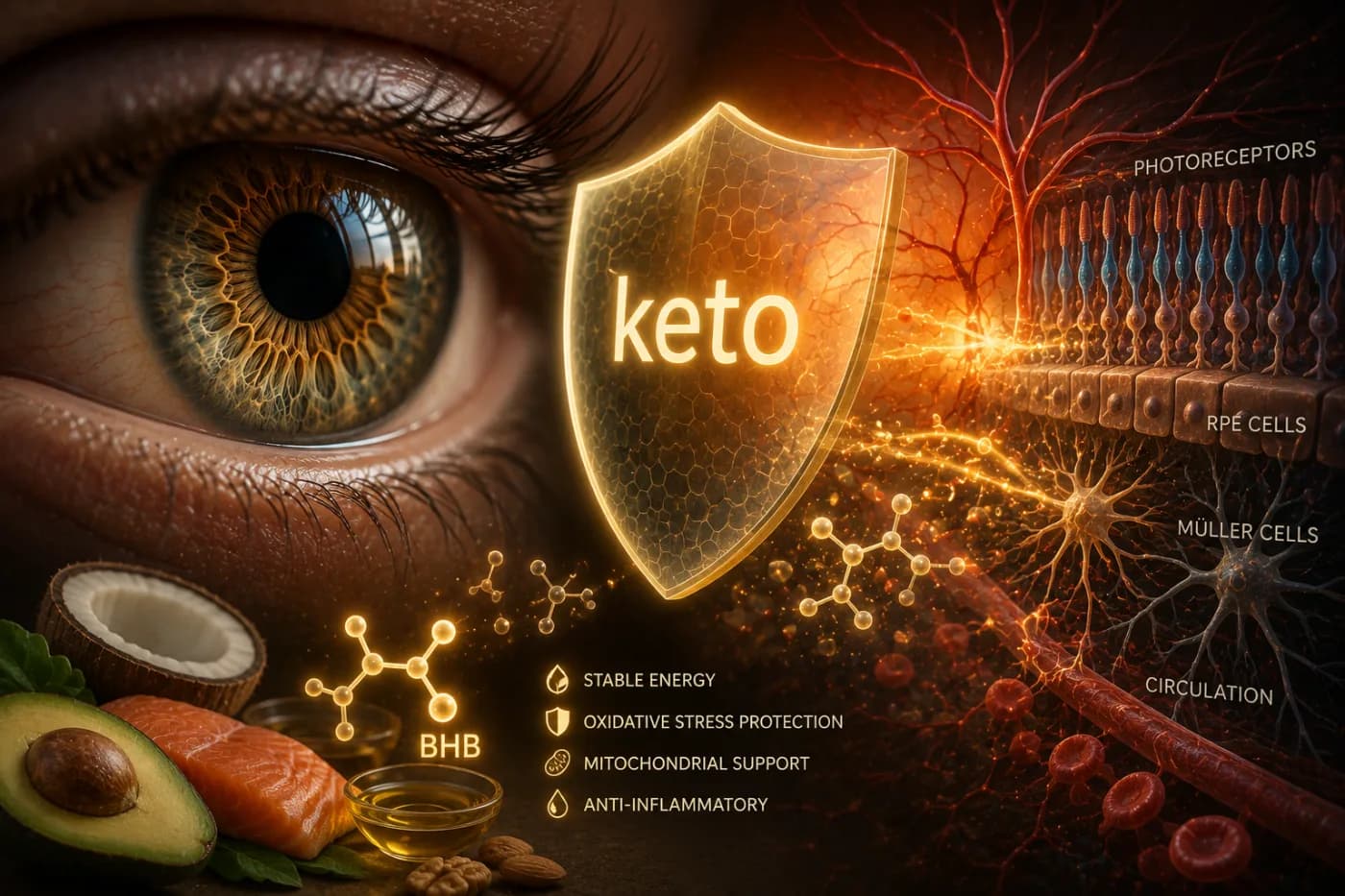
During fasting or ketosis, our liver and our RPE cells start producing molecules called ketone bodies, with the most important one being beta-hydroxybutyrate (BHB). These ketone bodies serve two beautiful purposes:
- They act as a clean fuel: Ketone bodies provide an alternative source of energy that bypasses damaged metabolic pathways, helping tired cells recover and survive.
- They activate the cleaning crew: BHB binds to specialized receptors in the eye (called HCAR2), which acts like flipping a switch. This signal stimulates the RPE to ramp up its phagocytosis (engulfing the shed tips) and mitophagy (recycling worn-out power plants).
By giving our eyes a break from constant sugar, ketosis and fasting trigger a deep, restorative cellular clean-up.
Sharing the Fuel
The relationship between the support cells (RPE) and our light-sensing cells (rods and cones) is a masterclass in cooperation.
Photoreceptors need a massive amount of glucose to maintain their structure and help us see. Under normal conditions, both the RPE and the photoreceptors compete for the same glucose in our blood.
When we enter ketosis, however, the RPE cells show a wonderful act of teamwork. The RPE cells switch their own diet entirely, burning healthy fats and ketone bodies for energy. Because the RPE cells no longer need glucose, they leave the available sugar entirely for the rods and cones.
This division of labor ensures that even when sugar is scarce, our light-sensing cells get all the specific fuel they need to keep our central vision sharp and clear.
Caring for Your Vision
Understanding how our eyes protect, clean, and rebuild themselves is a reminder of how deeply our vision is connected to our overall metabolic health. When we support our body's natural cellular recycling through balanced habits, we are actively helping our eyes stay resilient against aging and stress.
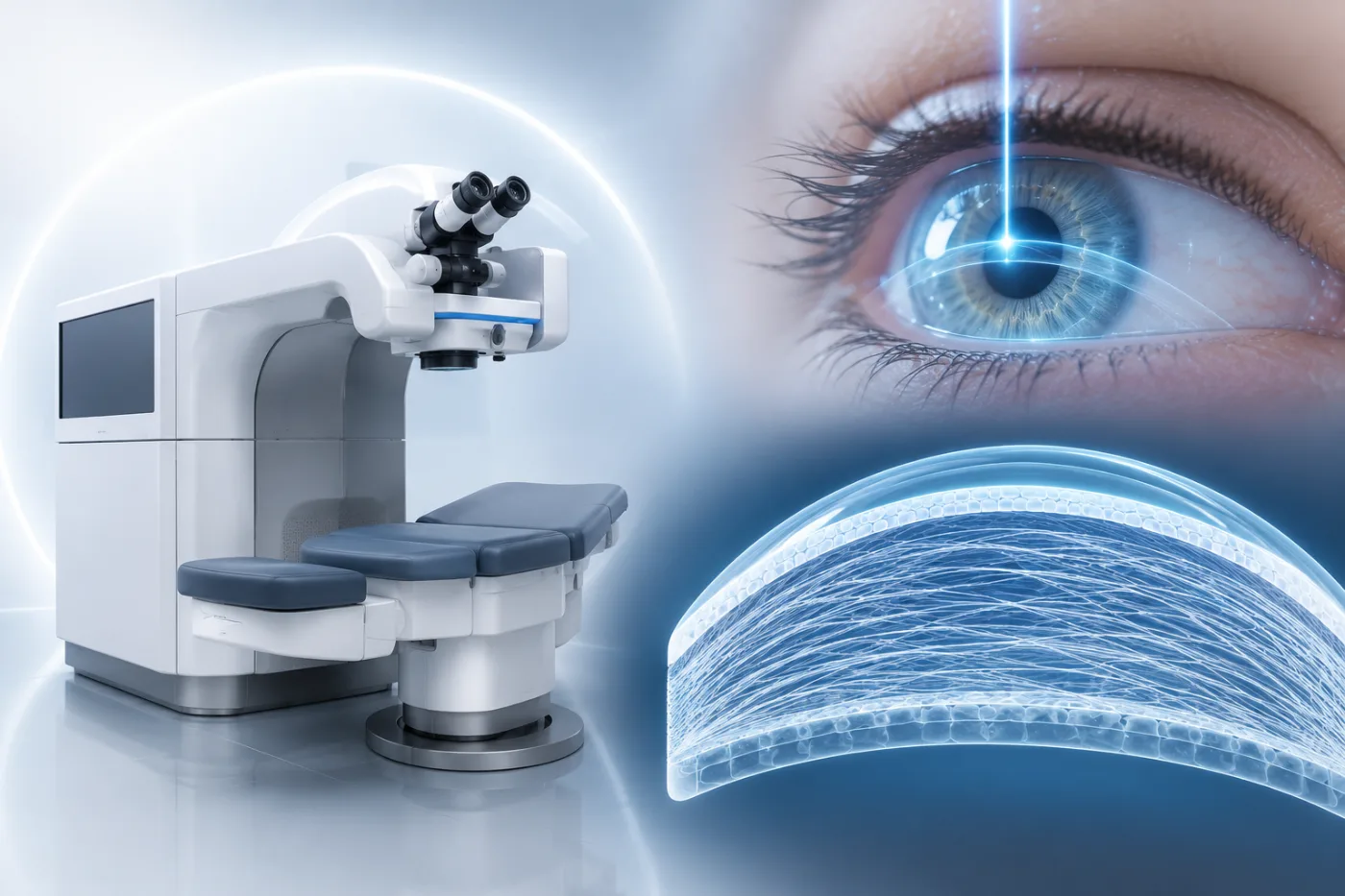
At KSA Eye Centre (ksa.ee), we believe that healthy, clear vision is a result of both natural biological care and mindful daily habits. While a balanced lifestyle and rest support your eye's inner clean-up crew, professional care helps ensure these delicate systems are working in harmony. Our team is dedicated to supporting your eye health journey, offering careful, non-invasive eye examinations and modern laser procedures like Flow3 to help keep your vision natural and clear for the future.