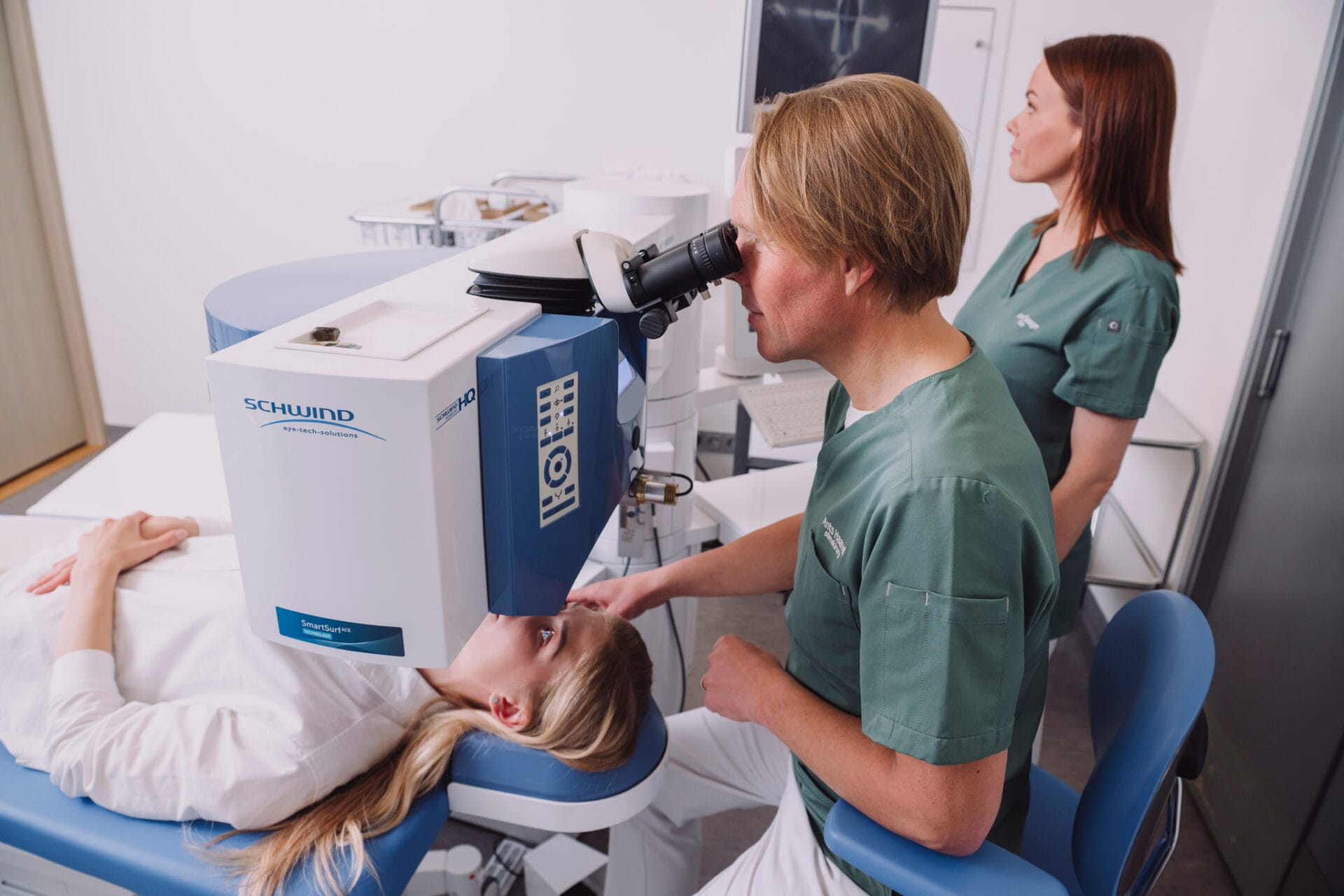
Dr. Ants Haavel, founder of KSA Silmakeskus, on what 20 years of experience, more than 55,000 operated eyes, and zero ectasia cases have truly taught him about laser surgery.
One Principle That Has Not Changed in Twenty Years
When Dr. Ants Haavel founded KSA Silmakeskus in 2005, the clinic’s philosophy was built around one simple principle: never do more to the eye than is truly necessary.
This principle did not come from textbooks or conference slides. It came from clinical experience — from years of seeing eyes that had been overtreated and operated on too aggressively. Eyes that had been approached as technical tasks rather than as one of the most valuable sensory organs a person has.
“I saw patients who came back with corneal ectasia,” says Dr. Haavel. “It is a condition that cannot be solved with glasses or contact lenses. People came in hoping to free themselves from glasses, but left with a much more serious problem. That was never a compromise I was willing to accept.”
Why the Flap-Free Approach
When entering the field of refractive surgery, Dr. Haavel faced a choice that was far from standard at the time. LASIK advocates emphasized fast recovery — patients could often see well the very next day. Surface ablation, by contrast, meant a slower recovery, more patient guidance, and more patience.
Studies show that after LASIK, the cornea retains only about 2–28% of its original strength. The risk of ectasia is approximately 4.5 times higher with LASIK than with surface ablation. A flap-free method (Flow3) does not create an irreversible cut in the cornea — meaning the cornea’s natural biomechanics remain intact.
The Number That Defines Our Work: Zero
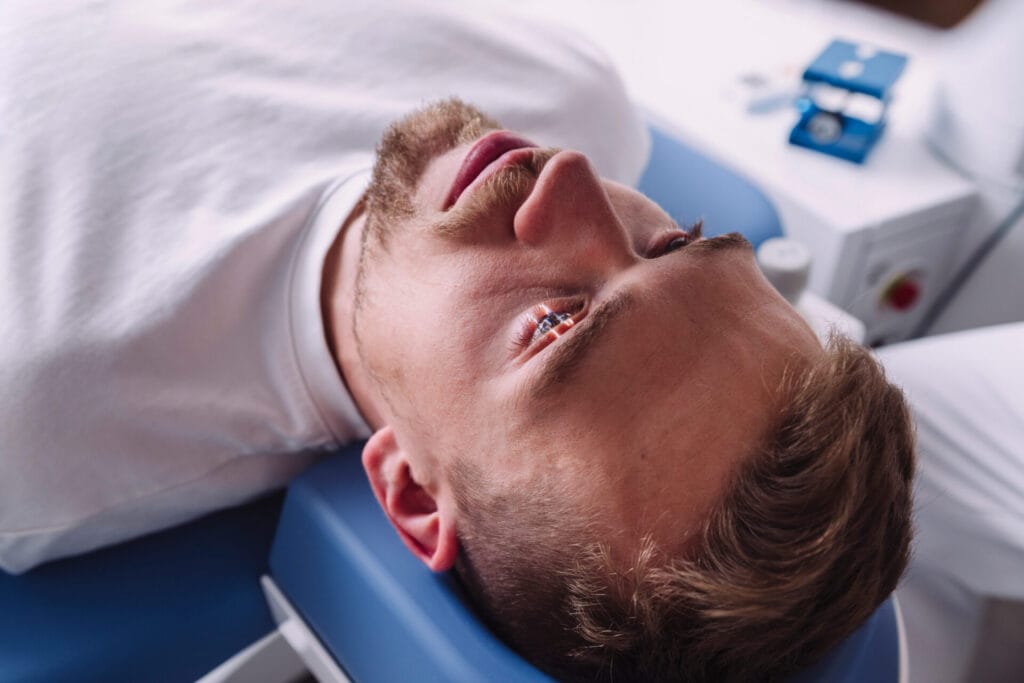
55,000 eyes. 20+ years. Zero ectasia cases. Zero surgically induced keratoconus.
According to Dr. Ants Haavel, this is not a coincidence: “A record of 55,000 operated eyes without a single such complication is one of the most precise indicators of safety in refractive surgery in the Baltics. It is the result of three things working together — rigorous pre-operative screening, individualized patient selection, and a flap-free method.”
At KSA Silmakeskus, the pre-operative examination lasts 60 minutes and includes thousands of measurements — corneal topography, thickness mapping, and biomechanical analysis. Around 15% of patients who come in hoping for surgery receive a “no” — because the cornea is too thin, the topography is irregular, or the person’s expectations do not align with the reality of the procedure. That honesty is just as important as technical precision.
What 20 Years Have Taught Us
Patience is part of the result. Recovery after a flap-free procedure takes time — the first week can be more blurred, and full visual stability typically develops over two to three months, sometimes a little longer. But that is the price worth paying to preserve the structural integrity of the cornea. In addition, based on clinical experience, presbyopia appears on average about 5 years later in patients who undergo flap-free surgery compared to flap-based methods — meaning a longer period of freedom in everyday life.
The machine is a tool; experience is the decision-maker. The Flow3 procedure combines Schwind Amaris 1050RS, SmartSurfACE, SmartPulse, and ITEC technologies, using 25–50% less laser energy than many competing methods. But even the most advanced machine only does what the surgeon tells it to do. The most important thing is knowing when to operate — and when not to.
Every eye is unique. Two people with −3.0 D myopia may appear similar on paper, but the geometry, thickness, biomechanics, and laser response of their corneas can differ significantly. A standard protocol that works well for 90% of patients may produce a suboptimal result for the remaining 10% if individual profiles are not taken into account.
Clear vision is not a luxury — it is a basic right for anyone living an active life, and KSA Silmakeskus was created to protect exactly that right.
What to Ask a Clinic
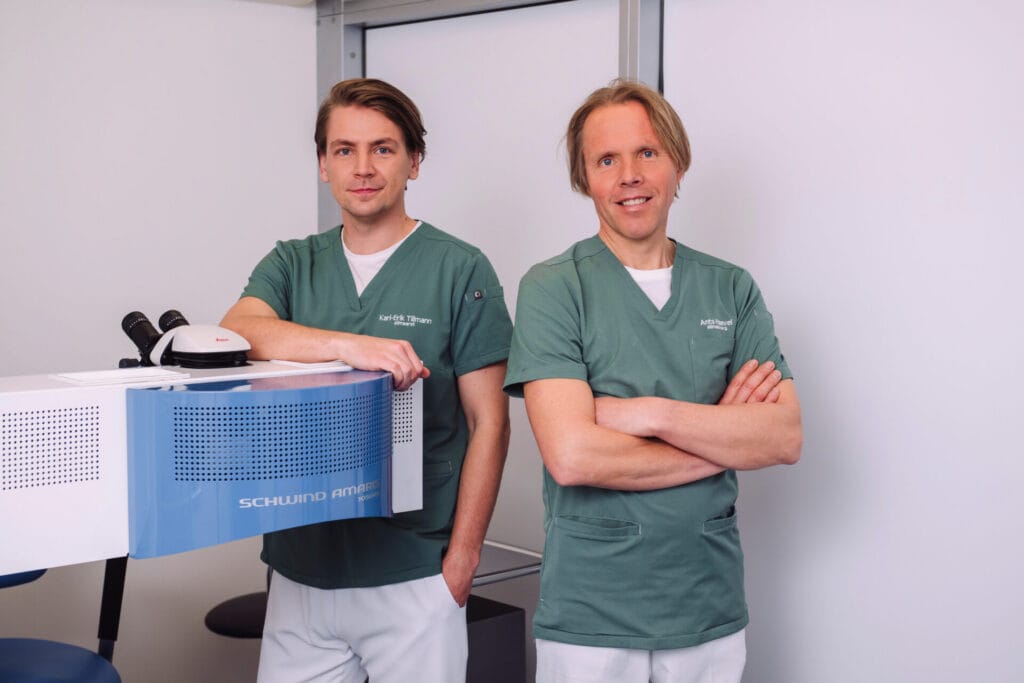
Both KSA eye surgeons — Dr. Haavel and Dr. Tillmann — recommend that patients ask clinics direct questions:
How many procedures has the clinic performed? How long does the pre-operative examination take? What percentage of patients are told “no”? A good clinic gives clear, concrete answers. A quick positive response without a thorough examination should be seen as a warning sign.
Take the first step toward clear vision!
Take the KSA quick test from the comfort of your home to get an initial idea of whether laser vision correction could even be an option for you, or book a comprehensive Flow3 eye examination that gives you 100% clarity on whether this myopia-correcting laser procedure is right for your eyes.