
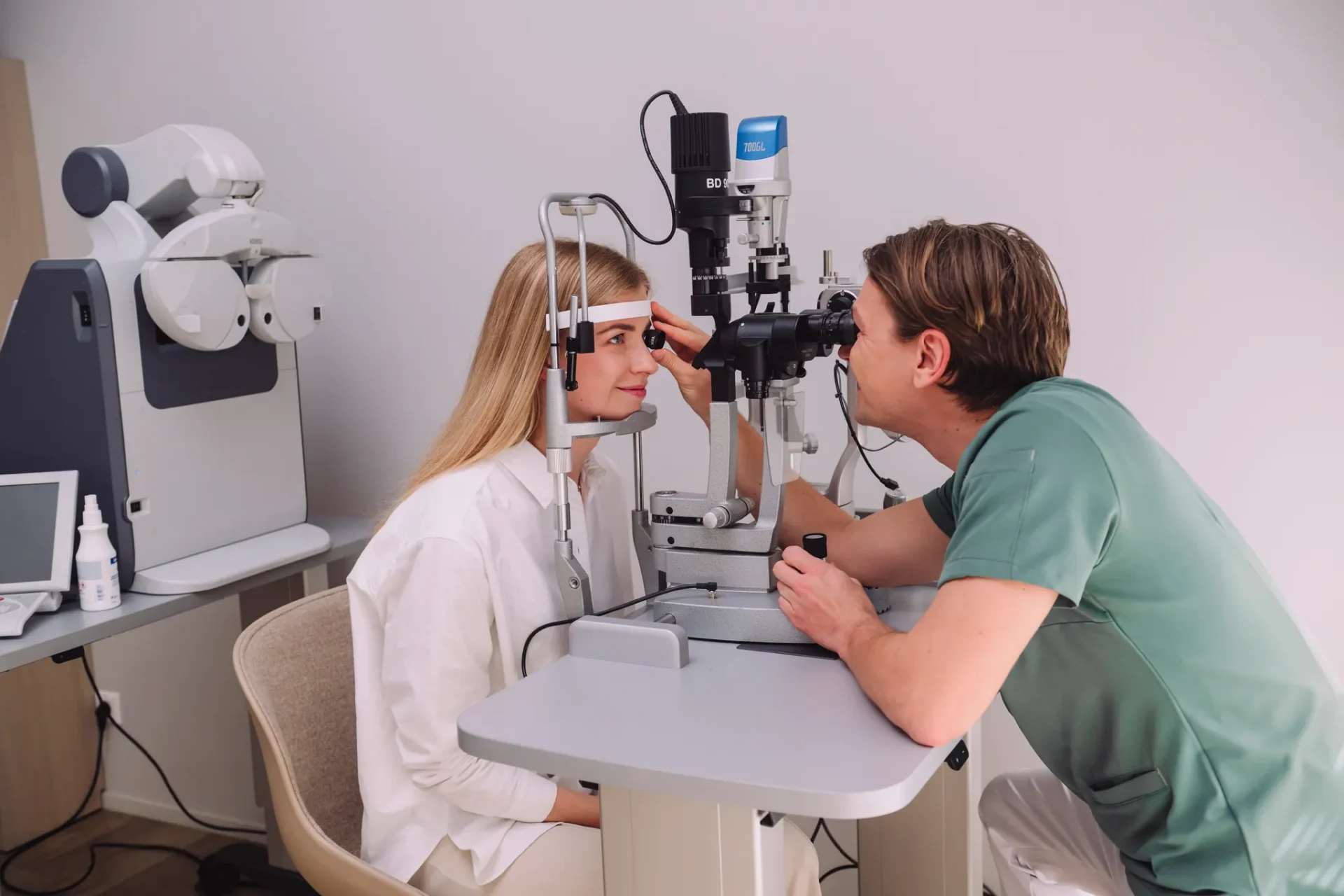
Cataract monitoring
A one-year programme for watching an early cataract: one full visit a year, lens measurements that can be compared from year to year, and a written ophthalmologist's assessment of when it is the right time to consider a lens exchange.
199 € a year · 1 visit · Tallinn and Tartu
Who the programme is for
- An early cataract that does not yet interfere with daily life, and the question of whether and when that time will come.
- Glare when driving at night, duller colours, a prescription that changes more often — signs that often have the lens behind them.
- People considering a lens exchange even without a cataract, for example to be free of reading glasses, who want to decide on measurements.
- Usually from the age of 50; earlier with diabetes, long-term corticosteroid treatment or high myopia.
How the year works
Drops and vitamins do not treat a cataract. The only treatment that works is a lens exchange, so the question is not whether but when: the timing of surgery is decided by how much the cataract interferes with daily life, not by whether it is “ripe”. The programme gives that decision numbers.
The visit is a full examination with an optometrist, the same scope as the Audit eye examination, plus the measurements of the lens itself: density with a Scheimpflug camera, a glare test and an OCT (optical coherence tomography) of the macula to rule out other causes of reduced vision. Biometry, the eye's dimensions, is taken at the start of the programme and then every two years.
The ophthalmologist compares the results with the previous year and sends a written assessment: how fast the cataract is developing, whether the lens is the only cause of reduced vision and when a lens exchange is worth considering. When that time comes, we plan it with you.

Visits during the year
Annual examination
optometrist · about 60 min · once a year
- Visual acuity and refraction: whether glasses still help
- Glare test: vision against the light
- Lens density measured with a Scheimpflug camera (densitometry) — a number to compare from year to year
- OCT of the macula, to rule out other causes of reduced vision
- Biometry at the start of the programme and then every two years
- Eye pressure, cornea and fundus as in the Audit examination
Written ophthalmologist's assessment within 7 days.
What we measure with
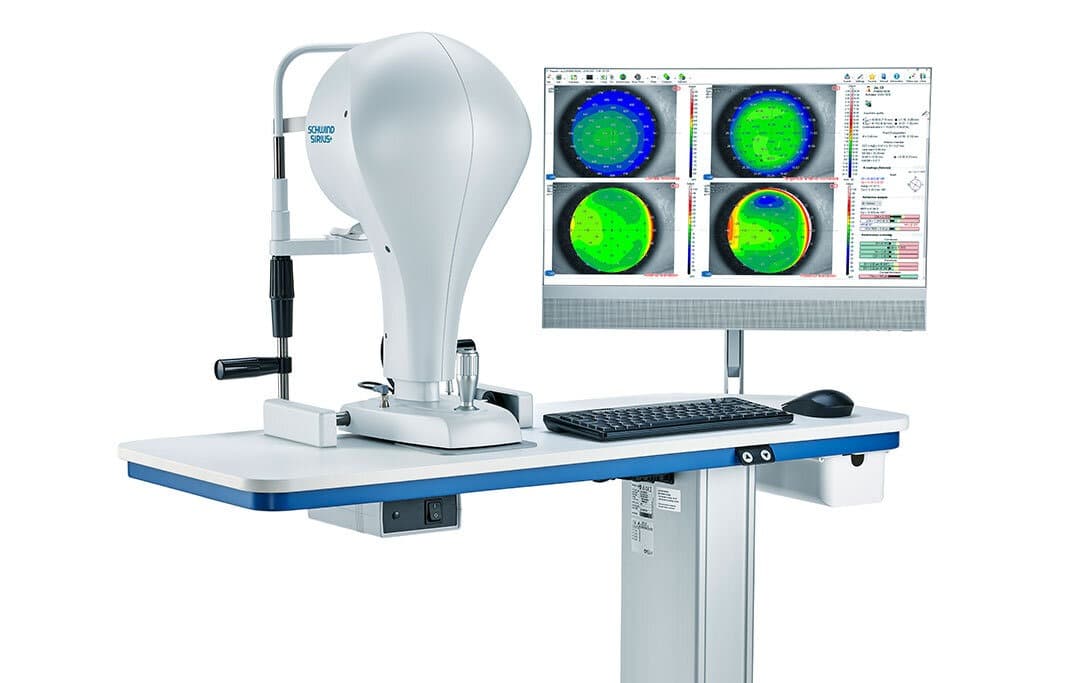
SCHWIND SIRIUS+
A Scheimpflug camera images the front of the eye from cornea to lens in one measurement: lens density, chamber angle and the meibomian glands.
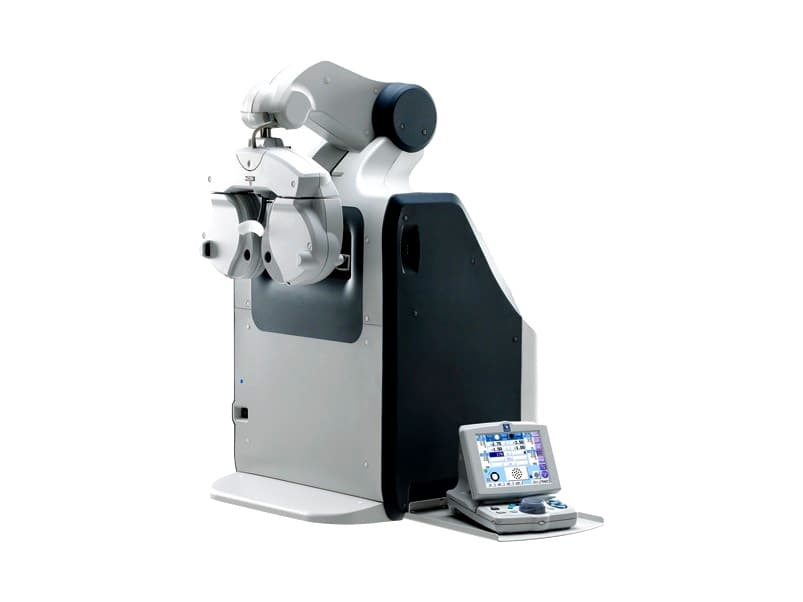
Nidek TS-310
Digital measurement of visual acuity and prescription that gives the same precise result every time.
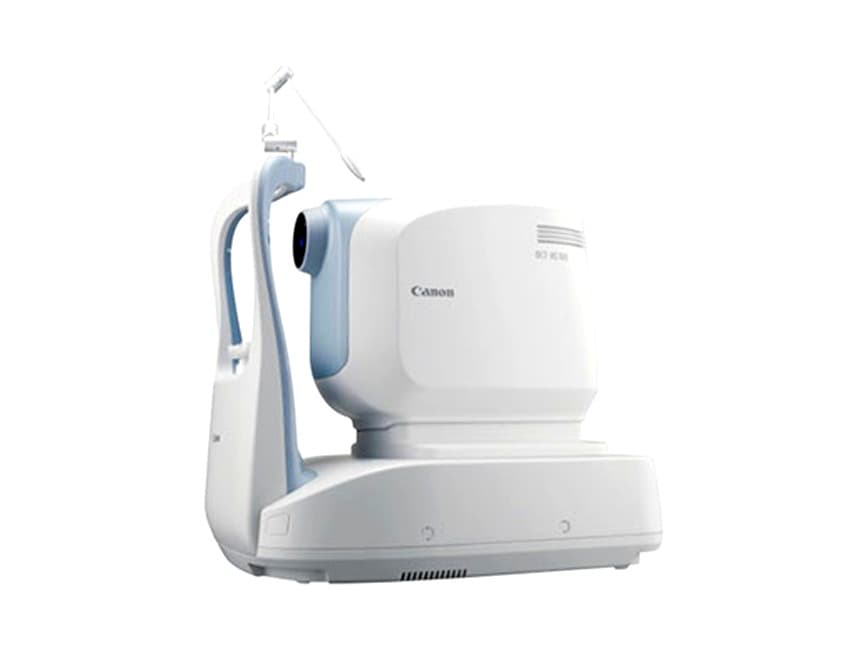
Canon OCT-HS100
3D scanning of the retina and optic nerve at microscopic precision. A change shows before you can feel it.
Short videos
If anything is still unclear...
No. That is an old idea. Today the timing is decided by how much your vision interferes with daily life: driving, reading, work. The programme helps you neither miss that moment nor rush it.
An optometrist takes the measurements; the ophthalmologist reviews them and gives a written assessment. If the choice of lens or the timing of surgery needs discussing, we arrange a doctor's appointment separately.
Then we plan it with you: we talk through the choice of lens, take the pre-operative measurements and agree the follow-up visits.
No. No drop, supplement or medicine makes a clouded lens clear again. The only treatment that works is a lens exchange, and the point of the programme is to make its timing clear from measurements.
Part of every programme payment accrues to your KSA account as credit. It can be used for treatment and treatment products at KSA. The credit is valid for five years from the last payment and is not transferable.
Yes. Every visit includes an ophthalmologist's assessment, so it is a healthcare service.
Decide on measurements
Book the annual examination. That is where the comparison starts that tells you when the time is right.