
Flow3 Technology explained
Flow3 now also includes SmartSurfACE and SmartPulse technology, as well as the ITEC system
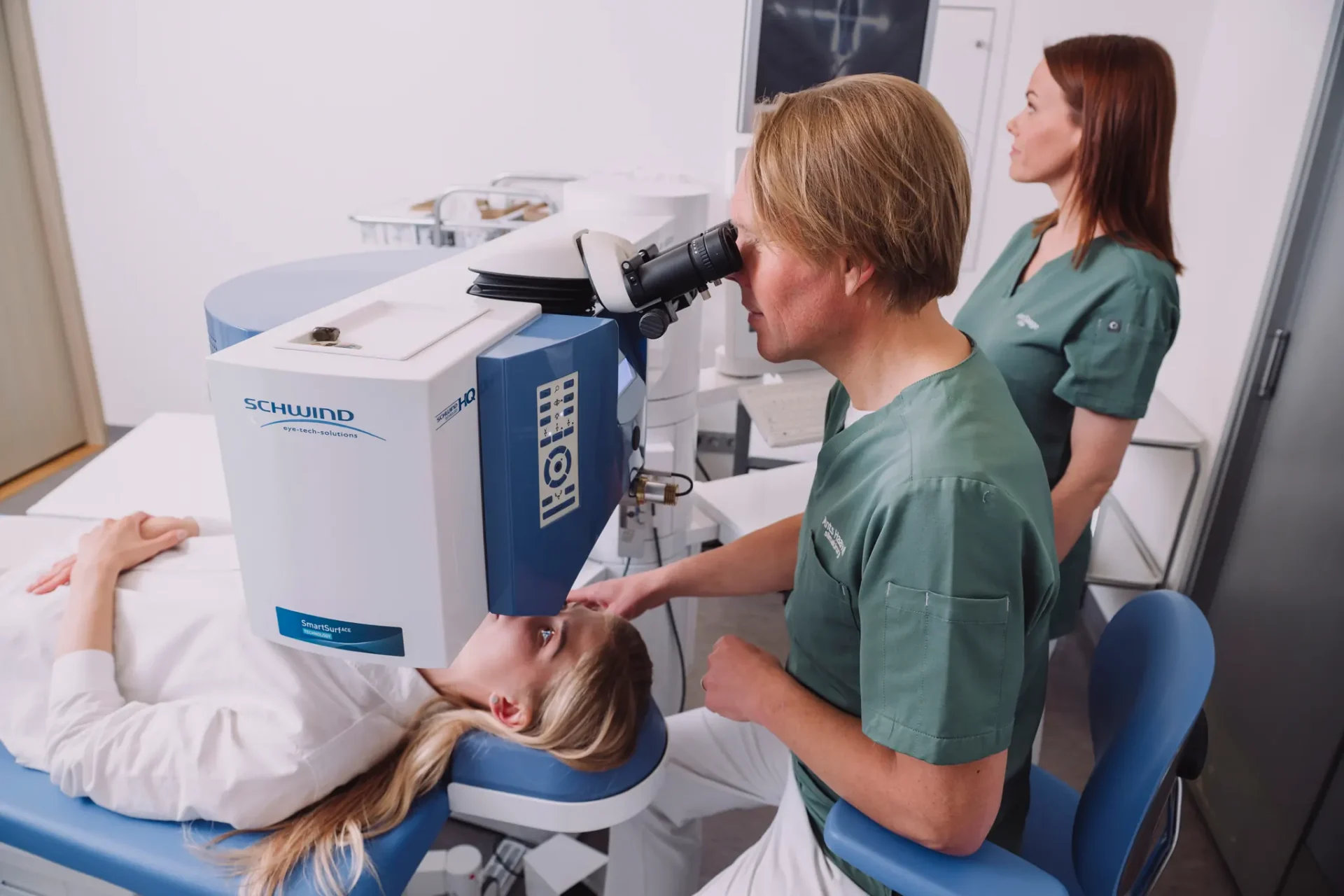
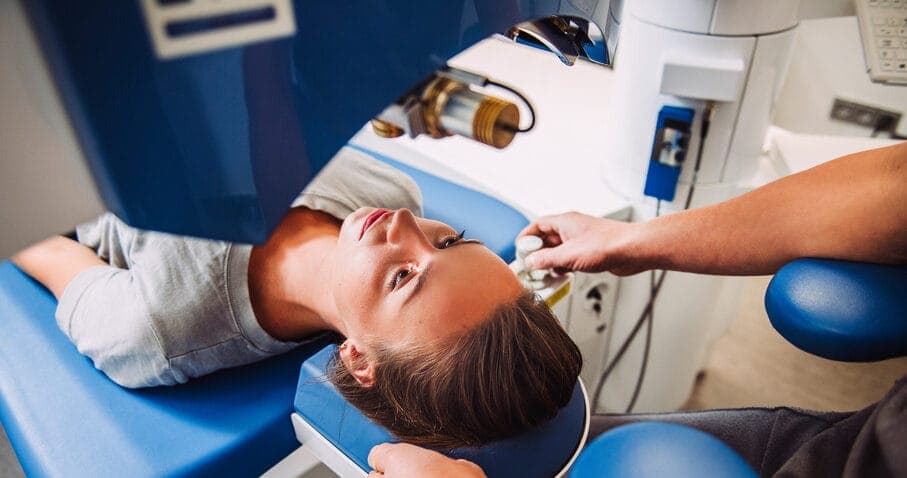
Flow3 is a touch-free surface procedure performed entirely with the Schwind Amaris 1050RS laser, without making any cuts to the eye. Recovery is natural and smooth, allowing you to quickly return to your normal active lifestyle.
2016. January, KSA Vision Clinic upgraded Flow3 procedure with SmartSurfACE and SmartPulse technologies, which are developed by Schwind EyeTech company. Those are the latest and most advanced technologies in the field of refractive surgery. 2018. Since May 2019 procedures were performed with the newest model of Scwhind Amaris 1050RS. The Schwind Amaris 1050RS is the world’s highest-performance eye laser system for refractive and therapeutic corneal surgery. It brings together the most advanced technology in existence.
Starting from April 2025, we perform laser procedures using the newest available Schwind Amaris 1050RS laser model. This laser is the latest premium model from Germany’s leading laser manufacturer, Schwind, delivering some of the best results in the world and featuring the most advanced technology available today.
Laser eye procedures have never been as safe as they are today – in 2025. Thanks to technological advancements, the only remaining advantage of incision-based procedures like LASIK and FemtoLASIK over Flow – faster recovery – is disappearing. Now, recovery from the incision-free procedure has been made as comfortable as possible with the support of KSA Vision Clinic’s 24/7 customer care, and lifestyle restrictions end as early as day 5–8. This makes it the best solution for people with active lifestyle.
Equipment we use for eye examinations
For the Audit exam and other eye examinations, we use digital measurement systems instead of a standard eye chart and trial frame — these give consistently accurate results that a paper-based assessment simply cannot match.
 The only one in Estonia
SmartSurfACE / Flow3 — touch-free surface treatment
Combines touch-free TransPRK surface treatment with SmartPulse technology. No suction, no blade, no incision — vision is corrected through the surface layers of the cornea, gently, touch-free, in a single step.
- One-year visual and refractive outcomes of SmartPulse technology in TransPRKMargarit et al., Journal of Clinical Medicine, 2024
- TransPRK outcomes using SmartPulse technologyAslanides and Kymionis, Contact Lens & Anterior Eye, 2017
- SmartSurfACE animation: how the touch-free procedure worksSchwind eye-tech-solutions, official technology video
Key highlights
- High-performance laser for refractive and therapeutic corneal surgery
- Fast ablation, 1.3 sec per dioptre* — supports patient safety and comfort
- Unique 7D eye tracking
- SCHWIND CAM software covers a wide range of treatment methods
- Gentle, incision-free treatment with SmartSurfACE technology
- Swivelling laser arm for doctor and patient convenience
- User-friendly design, high-gloss finish
Further capabilities
- ITEC (Intelligent Thermal Effect Control) — monitors corneal temperature and sequences pulses for minimal heating
- AFLA (Automatic Fluence Level Adjustment) — balances pulse count and energy for fast treatment and a smooth corneal surface
- Integrated slit lamp — for immediate post-op inspection of deeper corneal layers
- Integrated corneal cross-linking (CXL) lamp — ready to use immediately
- Swivelling laser arm and motorised swivelling treatment bed
- Treatment Assistant Manager (TAM) — guided sequence of treatment steps, each individually adjustable
- Integrated smoke evacuation and filtration for a clean operating room
- Automatic video recording of the procedure
- SCHWIND Foresight® — software for post-operative corneal visualisation
- CustomEyes® — a personalised treatment plan based on wavefront data (e.g. with Schwind Peramis, MS-39, Sirius+ diagnostic devices)
Source: eye-tech-solutions.com, SCHWIND AMARIS 1050RS product page. *LASIK, no astigmatism, 12.5 mm HSA, 6 mm optical zone — Schwind's own measured figure.
 Diagnostic device
Scheimpflug + Placido combination
Sirius+ combines a rotating 3D Scheimpflug camera with Placido topography, measuring the entire anterior segment of the eye in one step — corneal thickness, elevation, curvature and power, from both the front and back surface.
- Diagnostic accuracy in detecting keratoconus (Sirius Scheimpflug–Placido)ScienceDirect, 2026
- Repeatability of higher-order corneal aberration measurementsEye and Vision (Springer Nature), 2022
Key highlights
- Precise data on pachymetry, elevation, curvature and power — from both the front and back corneal surface
- Diagnosis of the entire anterior segment in one step
- High image quality across a 16 mm corneal diameter
- Up to 100 high-resolution pachymetry sections per acquisition, user-selectable
- More precise centring and results thanks to cyclotorsion correction data for Schwind Amaris and Atos laser treatment
- High-performance diagnosis for well-founded treatment decisions
- Easy to link with Schwind's treatment planning software
Application modules
- Keratoconus screening
- IOL calculation based on ray-tracing technology
- Intrastromal ring planning using pachymetry maps and corneal elevation profile
- Glaucoma screening
- Pupillography — dynamic and static pupil diameter measurement
- Video keratoscopy — for fitting rigid contact lenses
- Dry eye analysis — tear film, meibomian glands, conjunctival and limbal hyperaemia, tear meniscus
Clinical use at KSA (Dr Ants Haavel)
- The Scheimpflug camera images the entire anterior segment in cross-section — from the cornea to the lens — in a single acquisition
- Scheimpflug lens images help assess the state and progression of cataracts
- We use it to diagnose dry eye and track treatment outcomes over time, not just for a single snapshot assessment
Source: eye-tech-solutions.com, SCHWIND SIRIUS+ product page. Manufacturer: CSO S.R.L., Italy.
 Refraction system
5.7-inch touchscreen control box
All data is displayed clearly on screen, and the interface is simple and intuitive — speeding up the exam for both patient and optometrist.
Key highlights
- Simple, reliable refraction in a thoughtful design
- Operation-rich control box — 5.7-inch colour LCD touchscreen
- Ergonomic refractor head — precise, stress-free exam for both patient and operator
- Reliable chart unit — the same high-resolution chart for distance and near
- Flexible measurement options — suits both sitting and standing exams
- Easy installation — no complex angle or distance adjustments needed
What it measures and tests
- Prescription — sphere -19 to +16.75 D, cylinder 0 to ±6 D, axis 0-180° (0.25 D precision)
- Distance (5 m) and near vision (40 cm) with the same high-resolution chart
- Red-green (duochrome) test — fine-tunes prescription accuracy using colour perception
- Astigmatic clock dial — pinpoints the astigmatism axis
- Phoria test with fixation point — checks eye teamwork and muscle balance
- Contrast sensitivity test at 4 levels (100%, 25%, 12.5%, 6%) — important after cataract or laser surgery, when a standard chart doesn't show the full picture
- 6 chart types (letters, numbers, Tumbling E, Landolt C, child-friendly symbols, ETDRS) — suitable for children and non-readers too
Source: nidek-intl.com, TS-610/310 specifications brochure (TS-310 model figures).
 Retinal 3D scanner
70,000 A-scans per second
A fast scan speed means the exam typically takes under two seconds — reducing motion blur and making the exam more comfortable for the patient.
- Repeatability comparison with automatic tracing: Canon OCT-HS100 and Zeiss Cirrus HD-OCT 5000PLOS ONE, 2016 — independent comparative study
Key highlights
- 3D exams with automatic functions and high image quality
- Macula 3D — macular disease analysis
- Glaucoma 3D — measures nerve fibre layer (NFL), ganglion cell layer (GCL) and inner plexiform layer (IPL) thickness
- Disc 3D — NFL thickness and optic nerve head (ONH) parameters
- Up to 10 combinable exam sets; default sets: macula disease, glaucoma, choroid, anterior segment, general
- Choroid observation setting and noise reduction
- Automatic retinal layer boundary recognition
- Comparison against previous exams — tracks changes over time
In use at KSA
- Both clinics (Tallinn, Tartu) use the OCT-Angio HD add-on module, which visualises retinal and choroidal blood vessels without dye injection
Source: canon.co.nz, OCT HS100 product page.
 Coming October 2026
OCT + 32.5 MP retinal camera in one device
Xephilio OCT-R1 combines spectral-domain OCT and a high-resolution (32.5 MP) retinal camera in a single device — scanning an area of up to 14.7 × 13.4 mm at once.
Why this is a big step forward
- Fully automated, one-touch exam for both eyes with audio guidance — less stress for the patient
- 32.5 MP Canon EOS-based retinal camera — sharper, more accurate colour imaging than the current HS100
- Optional ANGIO Expert software: 2D/3D visualisation of retinal blood vessels without dye, AI-based noise reduction (Intelligent Denoise) from a single scan
- Canon Opacity Suppression — improves the image even when cataracts cause a hazy view
- Wide field imaging — up to 20 images combined into one panorama, up to 100° field of view
- Anterior segment OCT modes — detailed views of the cornea, anterior chamber and lens, no extra attachments needed
- Up to 50 scans averaged per acquisition — noise-free, highly detailed imaging with AI support
At KSA
- Arriving at both clinics (Tallinn, Tartu) in October 2026 — replacing the current Canon OCT-HS100 units
Source: eu.medical.canon, Xephilio OCT-R1 product page and official brochure.
 Children's vision screening
From 5 months old to adulthood
The device works for vision screening from infancy, when a child can't yet read a chart or actively cooperate — it's enough for the child to briefly look toward the device.
Key highlights
- Detects myopia, hyperopia, astigmatism, strabismus, anisometropia, anisocoria and media opacities
- Portable, battery-powered — no electricity or darkened room required
- 7-inch touchscreen with instant results
- Suited to high-volume screening (kindergartens, schools, outreach programs)
Source: Plusoptix (Nuremberg, Germany) and the device's official distributor product pages.
 4-in-1 rapid measurement
4 measurements in one device
Refractometer, keratometer, non-contact tonometer (intraocular pressure) and pachymeter — all in one compact instrument, one touch for both eyes.
Key highlights
- Refraction, keratometry, tonometry and pachymetry in one device
- Fully automated, rotatable touchscreen control panel
- Rotary Prism Technology — measures both eyes accurately with one touch
- IOP result is adjusted for corneal thickness (via pachymetry) — a more accurate reading than without adjustment
- Cataract mode allows measurement even with a hazier lens
- Compact, ergonomic design, small footprint
Source: Topcon Healthcare, TRK-2P product page specifications.
 VR visual field test
Eye tracking up to 240 frames per second
A camera built into the VR headset tracks the patient's gaze up to 240 times per second — the device always knows exactly where the patient is looking and adjusts stimulus locations accordingly.
Key highlights
- Automatic eye tracking, hands-free measurement — the patient doesn't need to remember where to look
- Reduces false-positive results since no response button is needed
- Compact and portable, no darkened room required — one operator can attend to more patients
- Results in a standard industry format (30-2, 24-2, 10-2) — comparable with results from other manufacturers' perimeters
- C-Peri software shows trends over time (MD, PSD) — important for monitoring glaucoma
- Hand-switch mode remains available for patients who struggle to hold a stable gaze (e.g. central scotoma or eye-movement disorders)
Source: Rexxam, official FIELDNavigator brochure and product page.
 Dry eye therapy
Contact-free electrodes in a mask
Treatment is delivered through electrodes built into a mask worn over closed eyes — setup is simple and the procedure itself is painless and relaxing.
Key highlights
- Treats all forms of dry eye — evaporative, aqueous-deficient, and mixed
- QMR (Quantum Molecular Resonance) technology — a weak alternating current in the 4–64 MHz frequency range
- Stimulates the eye's natural cell regeneration and reduces inflammation
- Contact-free electrodes built into a mask, worn over closed eyes — painless and relaxing
- CE marked (2016) for treatment of ocular surface disorders
At KSA
- The treatment course consists of 4 sessions (about 20–40 min each), once a week — around 80% of patients feel noticeable symptom relief
- Part of KSA's dry eye diagnostics and therapy service
Key highlights: rexoneye.com (Resono Ophthalmic). At KSA: KSA Vision Clinic's own clinical experience.
Additional information
The Schwind Amaris 1050RS works exceptionally fast – correcting one eye usually takes only 5–10 seconds. For higher prescriptions, such as –8 diopters or more, the laser may work for up to 20–30 seconds. The procedure is quick, precise, and painless for the patient.
1050 Hz means the laser delivers 1,050 light pulses per second. For comparison, a phone or computer screen operates at only 60–120 Hz. The higher the frequency, the shorter the procedure and the greater the precision.
Time in the treatment room is usually about 15 minutes — that includes preparation, numbing drops, the laser treatment, and placement of a protective contact lens. The laser itself is only a small part of that (a few seconds per eye). The procedure is painless throughout, the surgeon talks with you continuously, and calm music plays in the background.
Yes. Clinical research shows active, multi-dimensional eye tracking significantly reduces the need for retreatment — in one independent study, the retreatment rate dropped from 8.2% to 2.2% with active rotational-control tracking. The Amaris 1050RS's 7D tracking system works on the same principle.
The Schwind Amaris tracks the eye’s position more than 1,000 times per second and adjusts each laser pulse accordingly. If the eye moves unexpectedly or the patient blinks, the laser automatically stops and safely resumes exactly where it left off. The patient does not have to keep the eye completely still — the laser takes care of accuracy itself.
The tracker registers even the smallest micro-movements and keeps every pulse in the correct place — ensuring maximum safety and a reliable final result.
On average, only 12–14 micrometres of corneal tissue are removed to correct one diopter. For comparison: a human hair is about 70 micrometres thick, and standard printer paper is about 80–100 micrometres — demonstrating how precise and gentle the procedure is.
The Schwind Amaris 1050RS reshapes the cornea with ultra-fine precision, but prescriptions are planned in 0.25 diopter steps — matching the eye’s natural optics for a stable and clear result.
Every eye is unique – that’s why every Flow3 procedure begins with a detailed corneal map and precise measurements, allowing us to customise the laser pattern specifically to your eyes. The result is accurate and personalised vision correction.
KSA Vision Clinic is the only clinic in Estonia using the Schwind Amaris 1050RS together with the latest SmartSurfACE technology. This means exceptional precision, a short procedure, fast recovery, and a comfortable experience — thanks to our professional team.
Unlike traditional methods that require a corneal incision or mechanical lens removal, Flow3 is completely touch-free. The cornea retains its natural strength and heals naturally, making it suitable for people with an active lifestyle and for those with thinner corneas.
Do you want to know if Flow3 laser eye surgery is right for your eyes?
Book an eye examination – it’s the first step towards clarity and a life without glasses. The examination will give you a clear answer on whether your eyes are suitable for myopia correction with Flow3.