

Glaucoma monitoring
A one-year programme for people with glaucoma, a suspicion of it, or glaucoma in the family. Four visits a year, measurements kept in one place and comparable, and a written ophthalmologist's assessment after every visit.
399 € a year · 4 visits · Tallinn and Tartu
Who the programme is for
- Diagnosed glaucoma or pressure-lowering treatment — to see whether the treatment keeps the pressure at target and the optic nerve stays stable.
- Suspected glaucoma: raised eye pressure, a doubtful optic nerve finding or a thin cornea, where a single measurement gives no answer.
- Glaucoma in a parent, sibling or child. A close relative's disease raises the risk several times over, and then the series of measurements is worth starting before anything can be felt.
- Usually from the age of 40; earlier with high myopia, diabetes or long-term corticosteroid treatment.
How the year works
In glaucoma the outcome is not decided by a single measurement but by a series of them. Damage to the optic nerve cannot be reversed, but its progress can be stopped or slowed considerably if the change is found while you cannot yet notice it yourself. That is why this is a programme, not a single visit.
The first visit is a full examination with an optometrist, the same scope as the Audit eye examination: everything that the later comparison builds on is measured then. The next three visits are short, about half an hour, and a KSA assistant takes the measurements: eye pressure, corneal thickness, OCT (optical coherence tomography) of the optic nerve and, on schedule, the visual field.
After every visit the ophthalmologist reviews the results, compares them with the earlier ones and sends you a written assessment: whether the condition is holding still, whether the treatment is working and whether anything should change. If a prescription is needed, the doctor issues it digitally. If the finding calls for more, we agree the next steps with you.
Visits during the year
Full baseline examination
optometrist · about 60 min · at the start
- History and risk factors: family, medication, earlier measurements
- Visual acuity and refraction
- Eye pressure (tonometry) and corneal thickness (pachymetry) — a thin cornea makes the pressure read lower than it is
- OCT of the optic nerve and ganglion cells (RNFL, GCC)
- Visual field test with VR glasses (perimetry)
- Anterior chamber angle and lens assessed with a Scheimpflug camera
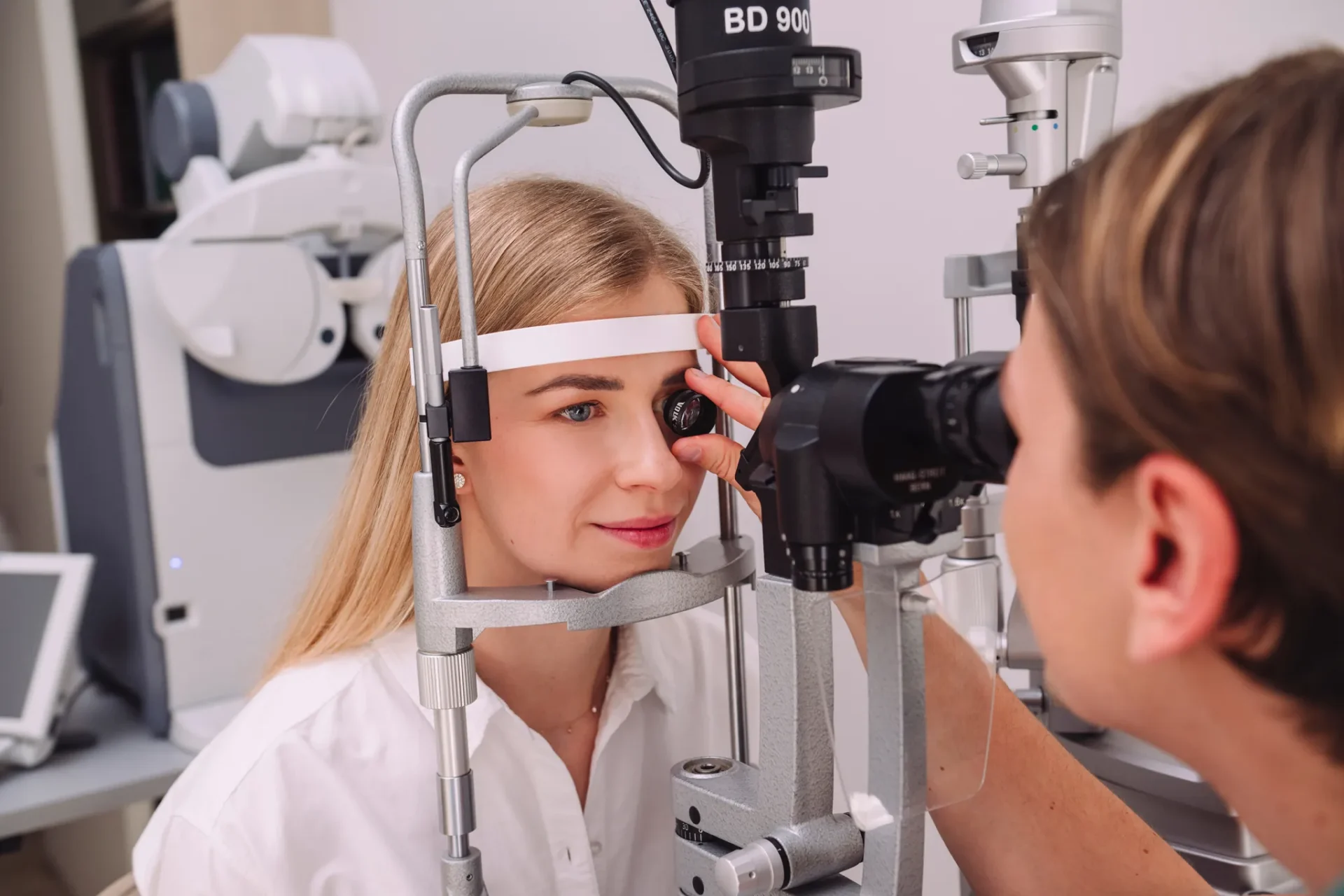
- Fundus photograph and slit-lamp examination
From this the ophthalmologist sets your personal target pressure and the baseline that later measurements are read against.
Measurement visit
KSA assistant · about 30 min · after 3 months
- Eye pressure and corneal thickness
- OCT of the optic nerve and ganglion cells
Written ophthalmologist's assessment within 7 days.
Measurement visit with visual field
KSA assistant · about 40 min · after 6 months
- Eye pressure and corneal thickness
- OCT of the optic nerve and ganglion cells
- Visual field test with VR glasses (perimetry)
Written ophthalmologist's assessment within 7 days.
Measurement visit and the year's summary
KSA assistant · about 30 min · after 9 months
- Eye pressure and corneal thickness
- OCT of the optic nerve and ganglion cells
The ophthalmologist compares all four measurements and advises how to continue.
What we measure with
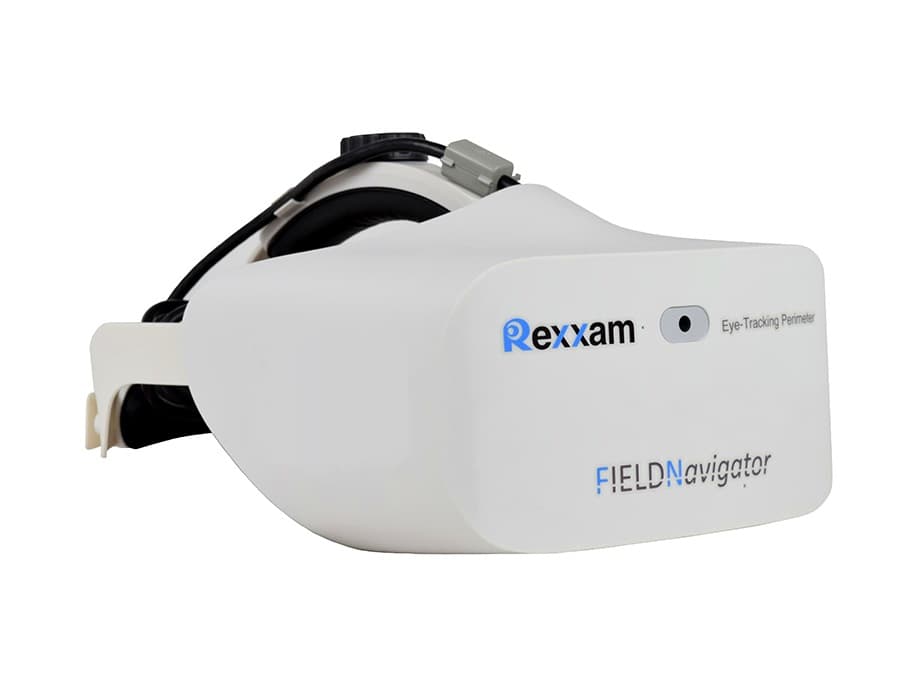
Rexxam FIELDNavigator
Visual field test in VR glasses. Gaze is tracked 240 times a second, there is no button to press and no darkened room.
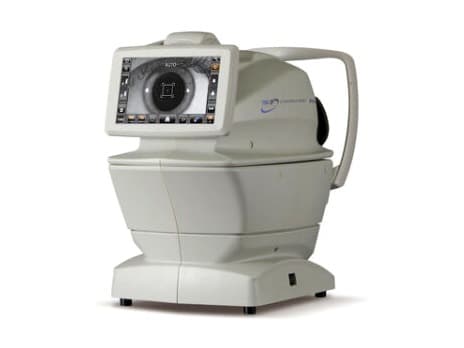
Topcon TRK-2P
Eye pressure and corneal thickness in one contact-free measurement. The pressure is corrected for corneal thickness.
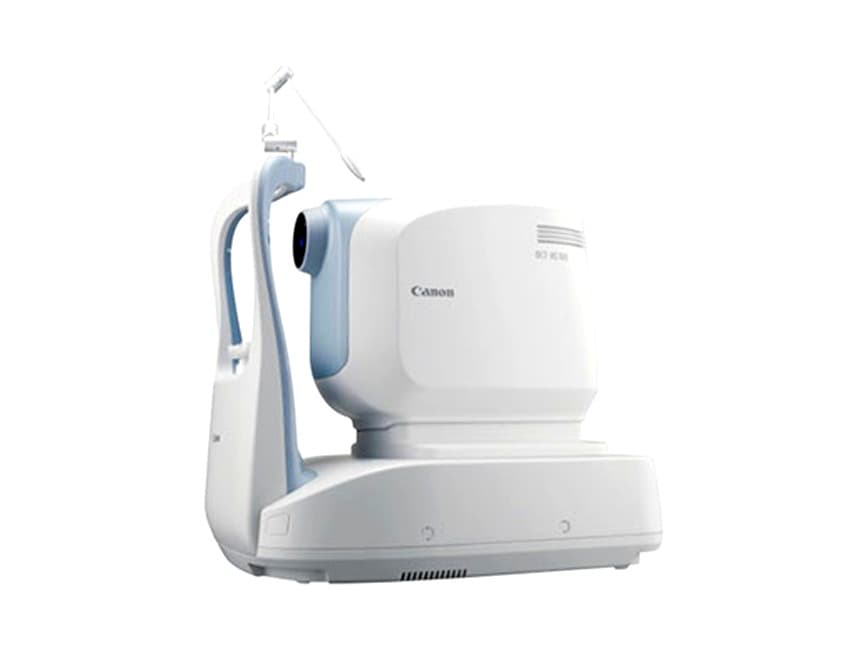
Canon OCT-HS100
3D scanning of the retina and optic nerve at microscopic precision. A change shows before you can feel it.
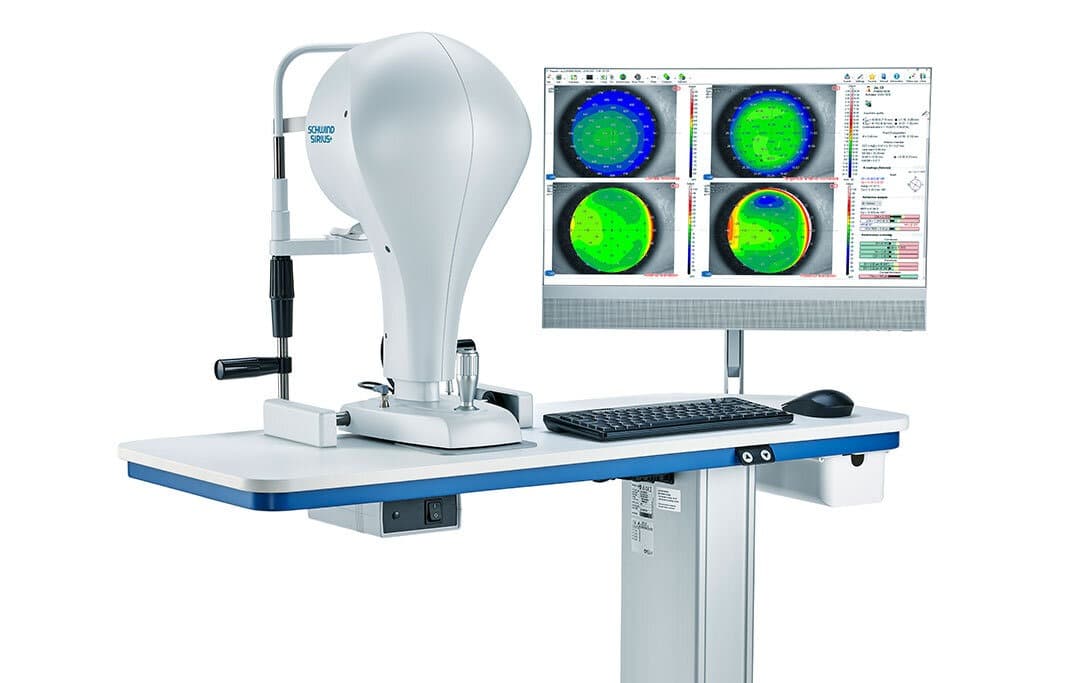
SCHWIND SIRIUS+
A Scheimpflug camera images the front of the eye from cornea to lens in one measurement: lens density, chamber angle and the meibomian glands.
Short videos
If anything is still unclear...
No, and that is deliberate. A trained KSA assistant takes the measurements on the same instruments every time, so the results are comparable and the visit is short. The ophthalmologist reviews every visit, compares it with the earlier ones and sends a written assessment. If a finding needs a doctor's appointment, we arrange one separately.
Yes. A series of measurements is most valuable exactly then. One raised pressure reading or one doubtful optic nerve image says little; four measurements a year show whether anything is moving. The same applies when a parent or sibling has glaucoma.
If the ophthalmologist sees from the results that treatment should start or change, the prescription is issued digitally and is available at the pharmacy. No separate appointment is needed.
Then we do not wait for the end of the year. The doctor contacts you, explains the finding and agrees the next steps with you, whether that is a change of treatment or a more detailed examination.
We test the visual field with VR glasses (Rexxam FIELDNavigator). You put the glasses on and sit comfortably — no darkened room is needed and there is no button to press. A camera inside the glasses follows your gaze 240 times a second, places each light point where your eye is actually looking and records your eye's response by itself. That way a wandering gaze or an accidental button press does not spoil the result, and the field maps stay comparable from visit to visit. If gaze tracking does not suit your eye, the test can also be done with an ordinary button.
Part of every programme payment accrues to your KSA account as credit. It can be used for treatment and treatment products at KSA. The credit is valid for five years from the last payment and is not transferable.
Yes. Every visit includes an ophthalmologist's assessment, so it is a healthcare service.
Start the series of measurements
Book the first visit. It is the full examination that everything else builds on.