Seeing in 3D: When 100% Vision Isn't Enough
Why sharp individual sight doesn't guarantee your child's eyes work as a team.
Imagine watching a movie where two separate cameras are filming the exact same scene, but one camera points straight at the actor while the other drifts off toward the side wall. If you tried to merge those two video feeds into a single screen, the picture would become confusing, blurry, or doubled.
That is very similar to what happens when a child experiences strabismus (eye misalignment) or an eye coordination disorder.
Visual Acuity Alone Isn't Enough
Many parents naturally assume that if their child can spot a tiny bird in a tree or read small letters across the room, their vision is completely healthy. However, eye care specialists frequently see children who have 100% visual acuity in each eye individually, yet struggle with eye alignment and teamwork.
Understanding how the eyes function together as a team—and why individual sharpness is only half the picture—is key to protecting your child's long-term visual health.
The Difference Between Sharp Sight and Eye Teamwork
When an eye specialist checks your child's visual acuity, they test how clearly each eye can see on its own. It is like testing two independent cameras to confirm both lenses are clear.
However, seeing clearly with each eye is only step one. Step two is binocular vision (eye teamwork)—the ability of both eyes to point at the exact same target at the exact same millisecond, sending two clear, aligned images to the brain.
When both eyes align properly, the brain performs a remarkable feat called stereopsis (3D depth perception). The brain takes the tiny differences between the view from the left eye and the view from the right eye and merges them into a single, rich, three-dimensional picture. Stereopsis is what allows a child to catch a flying ball, judge distances when riding a bicycle, or step comfortably down a flight of stairs.
If the eyes do not point in the same direction, the brain receives two conflicting images. To prevent double vision, a young child's brain might start ignoring (suppressing) the image from the drifting eye. Over time, this can lead to amblyopia ("lazy eye"), where the visual connection between that eye and the brain fails to develop fully.
Key Types of Eye Misalignment
Eye misalignment comes in different forms, depending on which way the eye drifts:
Esotropia: One or both eyes turn inward, pointing toward the nose. It is one of the most common forms of strabismus in infants and young children.
Exotropia: One or both eyes drift outward, pointing toward the temple. It often becomes noticeable when a child is tired, daydreaming, or looking far into the distance.
Pseudostrabismus (false strabismus): Sometimes, a baby or toddler appears to have eyes turned inward, but their eye alignment is actually perfectly straight! This visual illusion is often caused by a wide nose bridge or extra skin folds (epicanthal folds). A quick, professional examination can easily distinguish real strabismus from pseudostrabismus.
How Eye Specialists Evaluate Visual Teamwork
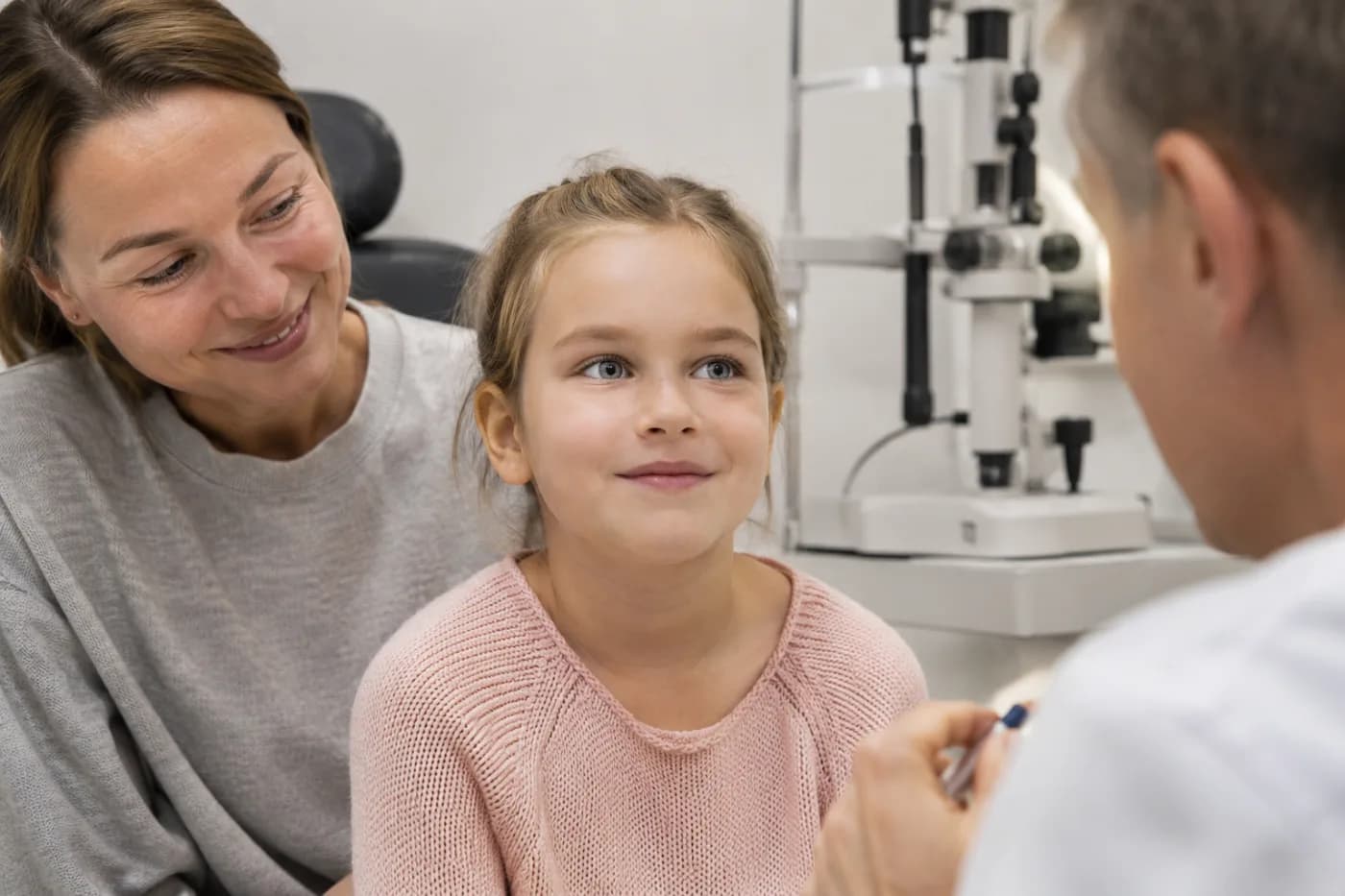
Checking how a child's eyes work together involves a thorough and gentle evaluation by a team of dedicated eye professionals:
The Optometrist: Tests visual acuity, checks for refractive errors (like farsightedness or astigmatism), and prescribes corrective lenses if needed.
The Orthoptist: Specializes in measuring binocular vision, calculating the precise angle of eye drift, and evaluating how well the eye muscles work together.
The Ophthalmologist / Eye Doctor: Evaluates the overall structural health of the eyes and determines if medical or surgical treatments are appropriate.
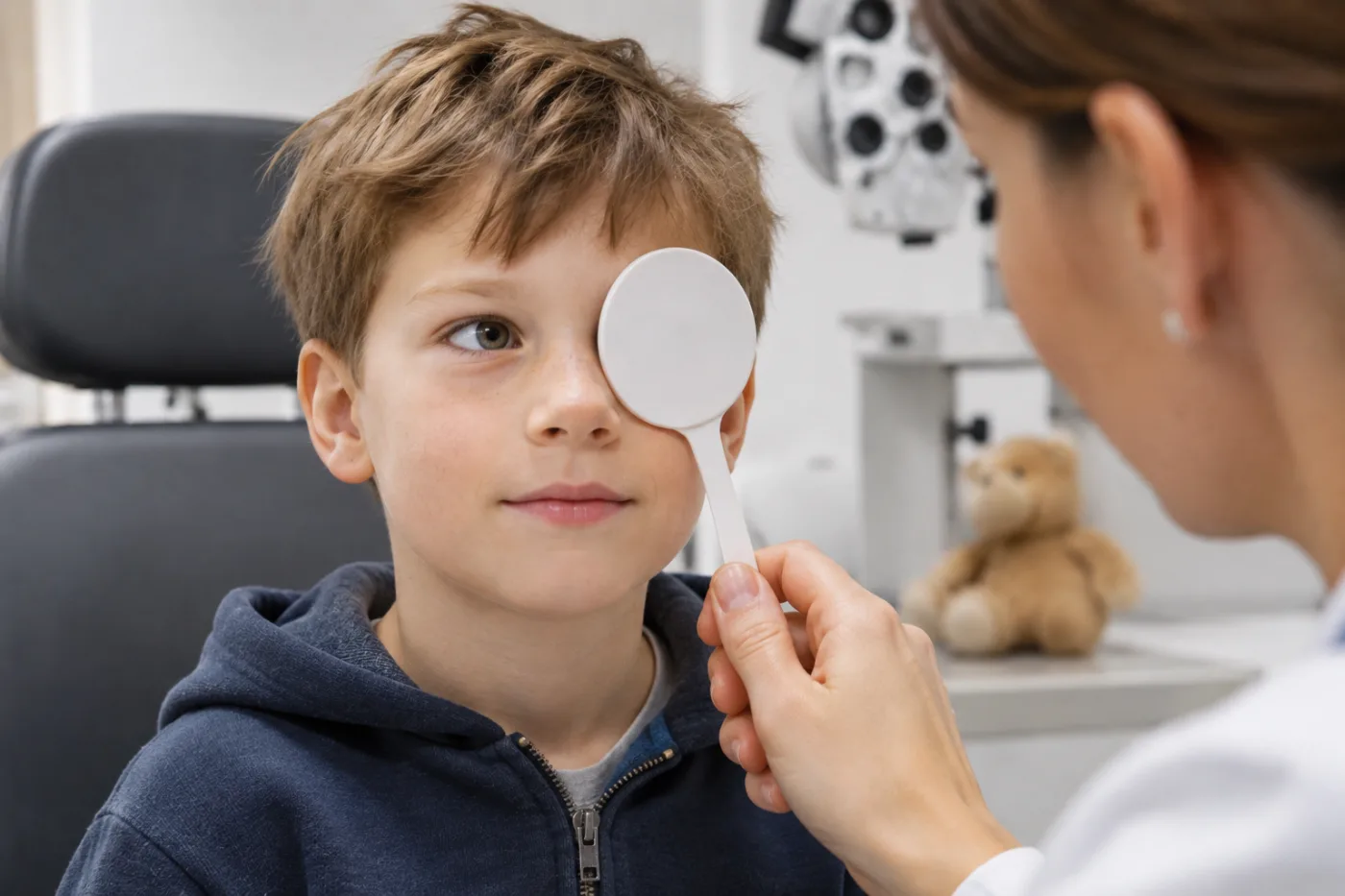
During an evaluation, the specialist uses light-tracking tools, 3D stereoscopic testing plates, and simple cover tests to observe how each eye behaves when focusing on objects near and far.
A Thoughtful Step for Your Family's Eye Health
Every child deserves to experience the world with clear, comfortable, and fully coordinated 3D vision. Because subtle eye teamwork issues can develop quietly without any obvious complaints from a child, regular and proactive vision checks offer invaluable peace of mind.
At KSA Silmakeskus, we believe that thorough, caring eye examinations are the foundation of a lifetime of good vision. With state-of-the-art diagnostic technology and a warm, supportive atmosphere across our clinics in Tallinn and Tartu, our experienced team takes the time to thoroughly assess both individual visual acuity and binocular eye cooperation. Whether you simply want to verify your child's eye development or seek expert guidance on vision care, KSA Silmakeskus is here to welcome your family with confidence and gentle medical expertise.