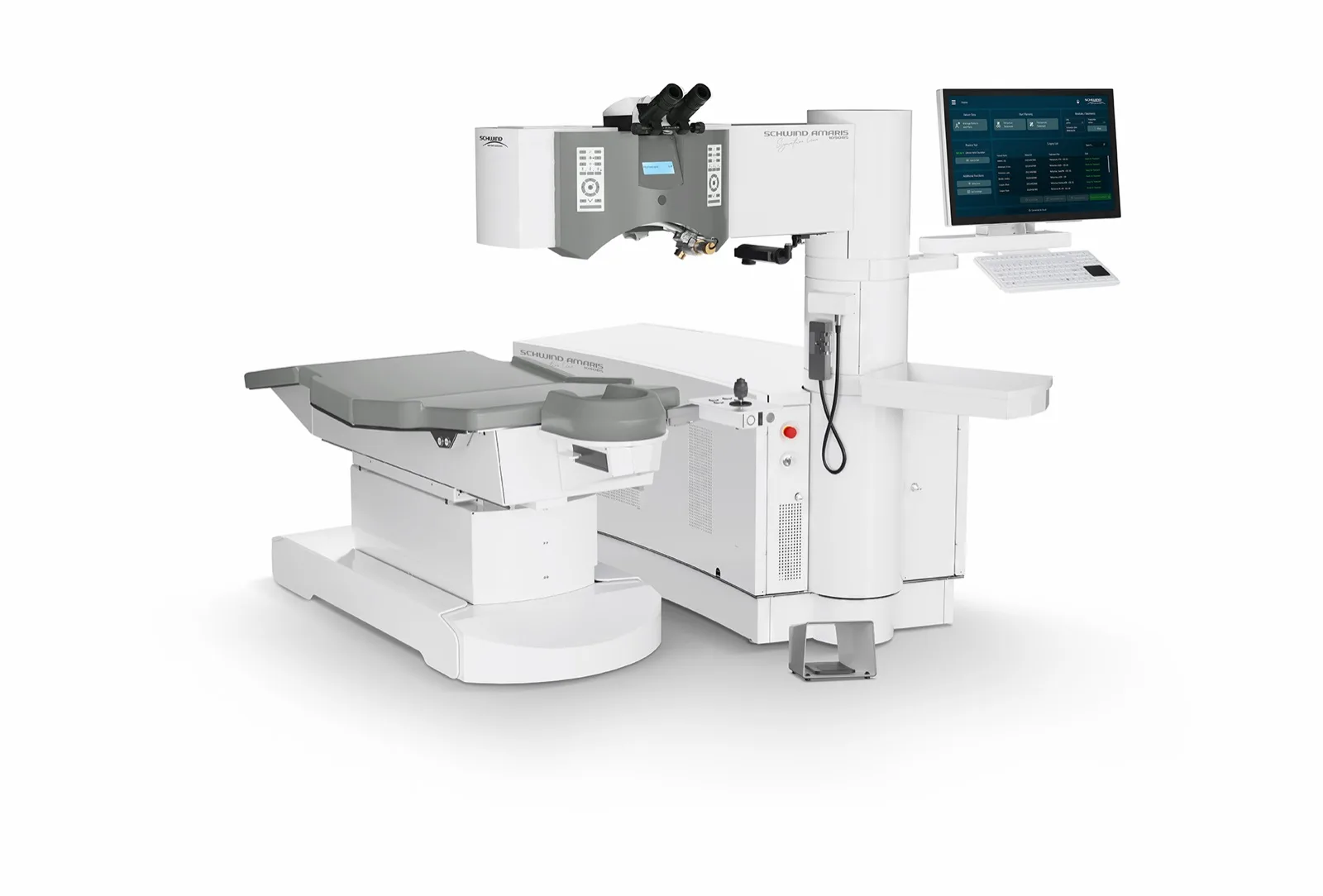
On 25 October we replaced the laser in our Tallinn operating theatre. The previous unit went back to the manufacturer, and in its place came a new SCHWIND AMARIS 1050RS, this time in the Signature Line configuration. In this configuration it is the only one in the Baltics.
What does that mean for a patient? In short: the procedure itself stays the same, the preparation became more precise, and a door opened for people over 40. Here is what changed.
What stayed the same
Flow3 is a no-cut surface procedure. The laser reshapes the surface of the cornea (the clear front window of the eye) without cutting into it. Recovery takes about a week. Once the protective contact lenses come out, you can go back to work, training and swimming.
The laser platform is the same too. We have worked with the AMARIS 1050RS since January 2018 and upgraded it in April 2025. The Signature Line is not a new method. It is a new set-up around the same laser: software, planning tools and how data moves.
Four things that were added
Presbyopia planning. Presbyopia is the age-related need for reading glasses: the lens inside the eye loses its flexibility and close work gets harder, usually after 40. The Signature Line has dedicated software modules for it, which let us draw up an individual treatment plan for patients over 40 as well. Whether a solution suits your eyes, and which one, is decided at the examination. It does not suit everyone, and we say so plainly at the examination.
SCHWIND Foresight. Before the laser starts, the software calculates the expected shape of the cornea. The surgeon sees the current shape and the post-operative model side by side on screen. It helps to plan the result in advance, not only to watch it during the procedure.
SCHWIND TheraCare. This module gives the surgeon extra tools for irregular corneal surfaces and therapeutic corrections, for eyes where a standard plan does not fit.
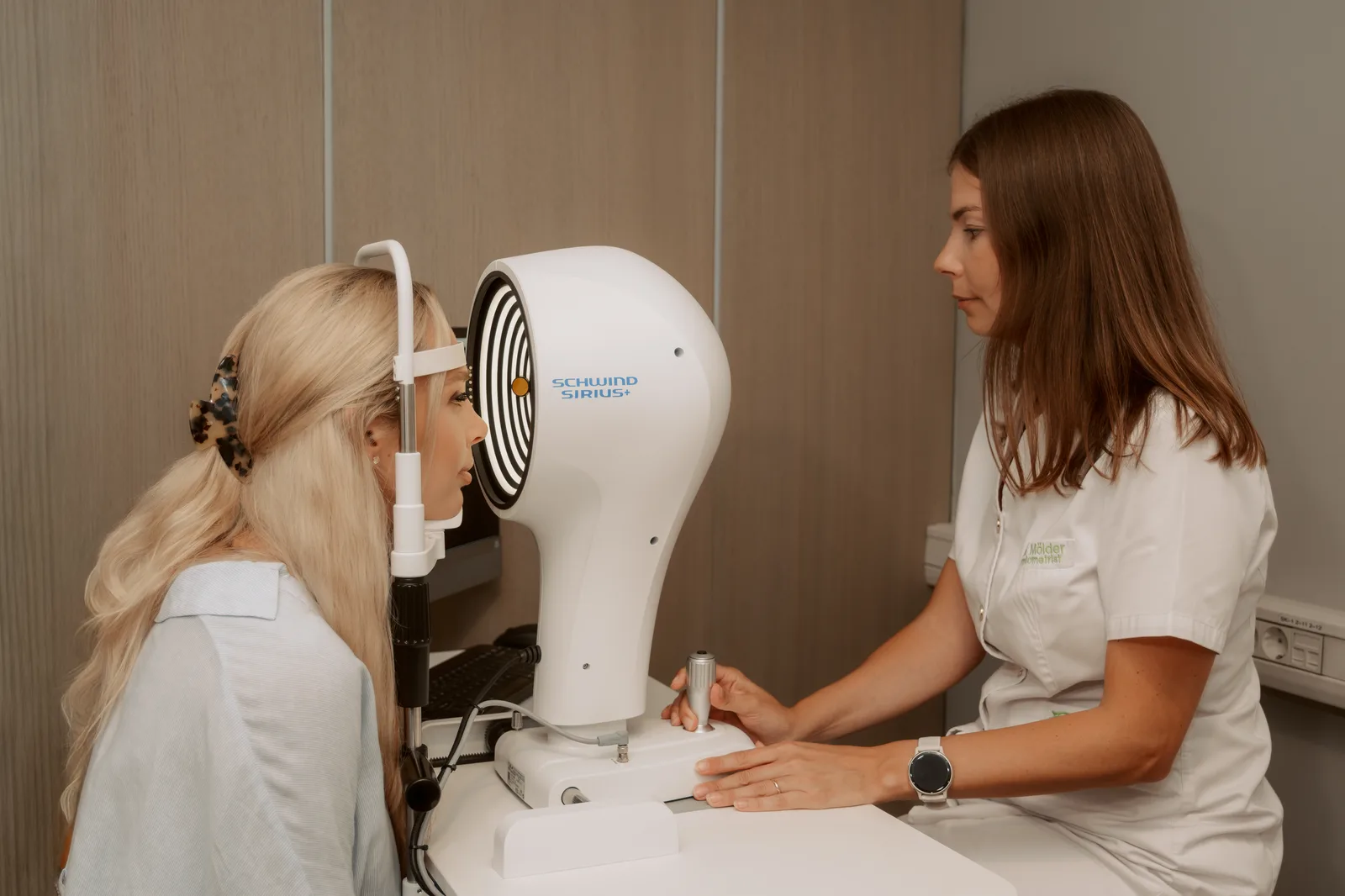
SCHWIND ATRIUM. Measurements from the diagnostic devices go straight to the laser. Some data used to be copied between systems by hand. Less manual work means fewer places where a mistake can happen.
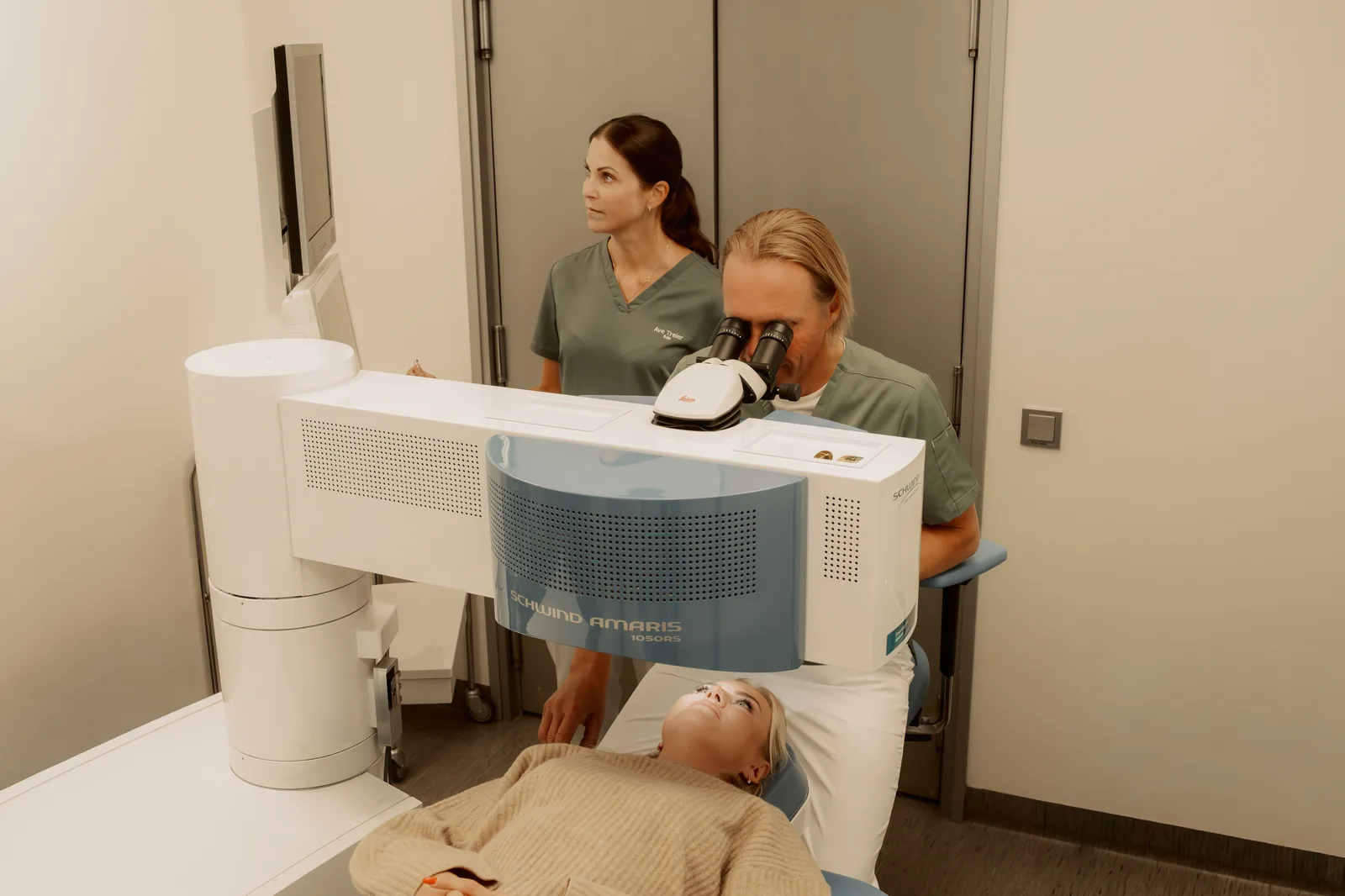
Our operating theatre in Tallinn. The photo was taken before the Signature Line was installed; the laser platform is the same.
What happens under the laser
For many people the scariest thought is that the eye will move. So here is how the laser deals with it.
The laser fires more than a thousand pulses per second. It usually works on one eye for 5 to 10 seconds, and up to 20 to 30 seconds for higher prescriptions. You are in the treatment room for about 15 minutes, and the surgeon talks to you the whole time.
The laser tracks the eye's movement continuously, in every direction, including the position of the pupil. If you move your eye or blink, the laser stops and continues from the same spot. Eye tracking has been studied: in one independent study, the need for retreatment fell from 8.2 to 2.2 percent with active eye tracking.
Who it is for
Flow3 is meant for people aged 18 to 45 with confirmed short-sightedness (distant things are blurry), including those with astigmatism. Every procedure starts with a thorough examination: we measure the cornea, look at the back of the eye and find out whether laser correction suits your eyes. About 60 percent of the people we examine get the green light. To the rest we explain why not, and what is a better path for them.
If you are over 40 and thinking about reading glasses, I wrote more about laser eye surgery after 40.
Why we took this step
KSA Vision Clinic has worked since 2005. We have performed over 55,000 laser procedures and over 300,000 eye examinations. In those 55,000 procedures we have not had a single case of ectasia (bulging of the cornea, one of the most serious complications of laser correction). That is our record so far, not a promise for the future.
For a clinic with that experience, keeping the technology current is part of the job. Every step that cuts manual work and makes the plan more precise is a step in the patient's favour. Equipment alone does not make a good result, but good equipment gives an experienced surgeon more certainty.
All our devices and what they do are on the KSA technology page.
Where to start
If you are thinking about life without glasses or lenses, start with the three-minute quick test. It tells you whether an examination is worth booking. A definite answer comes from the Flow3 eye examination.
If you have worries you would like to think through first, 7 myths about laser eye surgery may help.
Sources: SCHWIND eye-tech-solutions product information (SCHWIND Signature Line, SCHWIND AMARIS 1050RS, SCHWIND Foresight, SCHWIND ATRIUM); KSA Vision Clinic technology and facts pages (ksa.ee/en/laser-eye-surgery/flow3-technology, ksa.ee/en/ksa-facts).