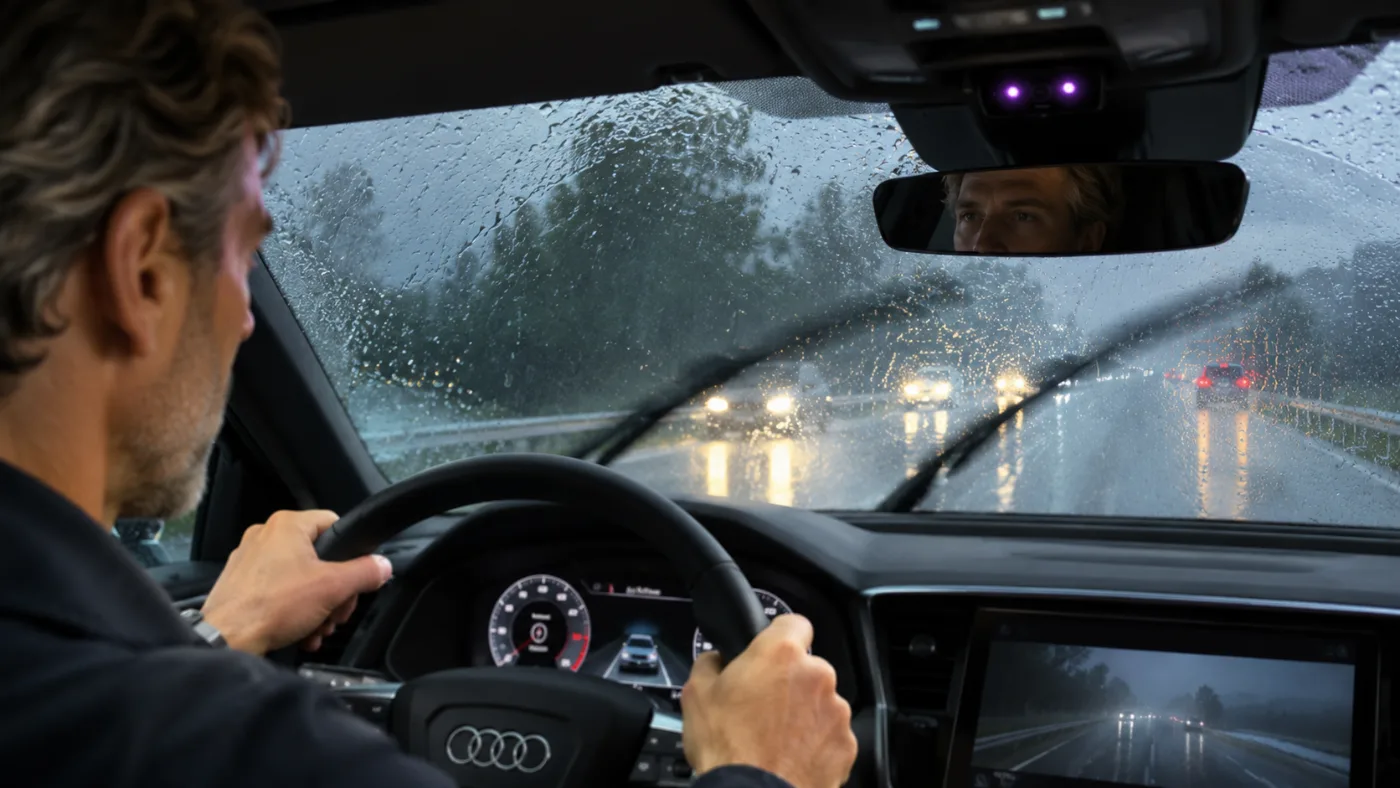
Have you noticed that the newest generation of vehicles does not just illuminate the road ahead—they are actively watching you? A subtle infrared sensor on the steering column monitors your gaze, while high-performance thermal cameras behind the grille detect pedestrians and wildlife in pitch darkness long before your headlights reach them.
Driving on dark, unlit rural highways during late autumn and winter is a universal challenge: glare from oncoming high beams, torrential downpours overwhelming the windshield wipers, and thick blankets of fog. Under these conditions, the human visual system operates under severe physical strain.
Yet behind the scenes, the automotive industry has undergone a quiet sensory revolution. Modern cars now feature a dual artificial vision architecture: one intelligent system monitors the driver inside the cabin, while another cuts through obscurants and darkness outside.
How do these technologies work, how do they mirror high-precision diagnostic tools in modern ophthalmology, and why do your biological eyes remain the ultimate safety sensor behind the wheel?
The In-Cabin Camera Decoding Your Eye Movements (DMS)
Driven by regulatory frameworks like the European Union's General Safety Regulation (GSR II), modern passenger cars are increasingly equipped with advanced Driver Monitoring Systems (DMS).
This is not an invasive surveillance camera recording private footage. Hidden inside the steering column or digital cluster is an infrared sensor paired with an invisible infrared LED illuminator. This allows the system to capture precise facial and ocular geometry in complete darkness and even through polarized sunglasses.
What is the AI actually measuring?
PERCLOS (Percentage of Eyelid Closure). The system does not wait for a driver to fall fully asleep. It mathematically computes PERCLOS—the proportion of time the eyelids cover 80% or more of the pupil over a moving time window. A steady upward drift in PERCLOS triggers a tiered drowsiness alert.
Gaze Vectors and Microsaccades. The human brain directs gaze through continuous rapid jumps called saccades. As cognitive fatigue sets in, saccadic velocity drops, blink durations elongate, and gaze fixation becomes rigid and unyielding. Using the corneal reflection and the geometric center of the pupil, the system tracks 3D gaze direction across real-world cockpit zones.
Microsleep Detection. When a driver slips into a microsleep lasting just one or two seconds at 90 km/h (55 mph), the vehicle travels 25 to 50 meters completely unguided. DMS algorithms detect microsleep episodes, yawning frequency, and micro-steering adjustments, intervening before a catastrophic lane departure occurs.
For ophthalmologists and neurologists, this kinematic relationship is well-proven: the motion of the eyes is a direct window into brain alertness, neural processing speed, and cognitive fatigue.
Thermal Cameras and Sensor Fusion: Seeing Through Fog and Torrential Rain
While internal cameras monitor the driver, external perception systems scan the path ahead. However, standard optical cameras (like those used in conventional lane-keeping systems) suffer from the same optical limitations as human eyes in severe weather: suspended moisture droplets scatter visible light (Mie scattering), washing out road contrast.
To overcome this, next-generation vehicles deploy Long-Wave Infrared (LWIR) thermal cameras combined with intelligent sensor fusion:
Sensing Emitted Heat Rather than Reflected Light. Unlike human vision and visible cameras, which rely on light bouncing off an object, thermal imagers detect the electromagnetic heat signatures naturally emitted by living organisms and warm engines (in the 8–14 micrometer spectrum).
Penetrating Atmospheric Obscurants. Longer infrared wavelengths pass through water droplets, fog, smoke, and spray far more effectively than visible wavelengths. Consequently, automotive thermal imaging can spot a pedestrian dressed in dark clothing or a deer crossing the road up to 300 meters away—far beyond the reach of modern LED high beams.
Radar and LiDAR Redundancy. Thermal perception works synergistically with 4D millimeter-wave radar and solid-state LiDAR. When blinding headlight glare disables visible-light cameras, thermal sensors identify thermal contrasts and radar verifies distance and velocity.
Human Eyes vs. Machine Sensors: The Biological Parallel
Comparing automotive machine perception with human vision reveals fascinating parallels. The human eye is an extraordinary biological instrument. The retina boasts immense dynamic contrast range, and our visual cortex processes nuanced traffic dynamics with fluid context.
However, biological vision has firm physical boundaries:
Our eyes only detect a narrow band of the electromagnetic spectrum (visible light from 380 to 750 nanometers). We cannot see thermal infrared.
In low-light environments, our pupils naturally dilate to capture more light, which exposes subtle optical aberrations of the cornea and crystalline lens (such as astigmatism or light scatter, causing halos and glare starbursts).
When eyes become dry, fatigued, or strained from digital screens, contrast sensitivity and nighttime reaction speeds drop measurably.
While smart automotive sensors provide an invaluable safety net, over 90% of driving decisions still rely directly on the driver's own visual clarity. If a driver's vision is compromised, even the smartest vehicle assistance systems cannot substitute for human visual judgment.
Ensuring Your Biological Sensors Are Operating at Peak Performance
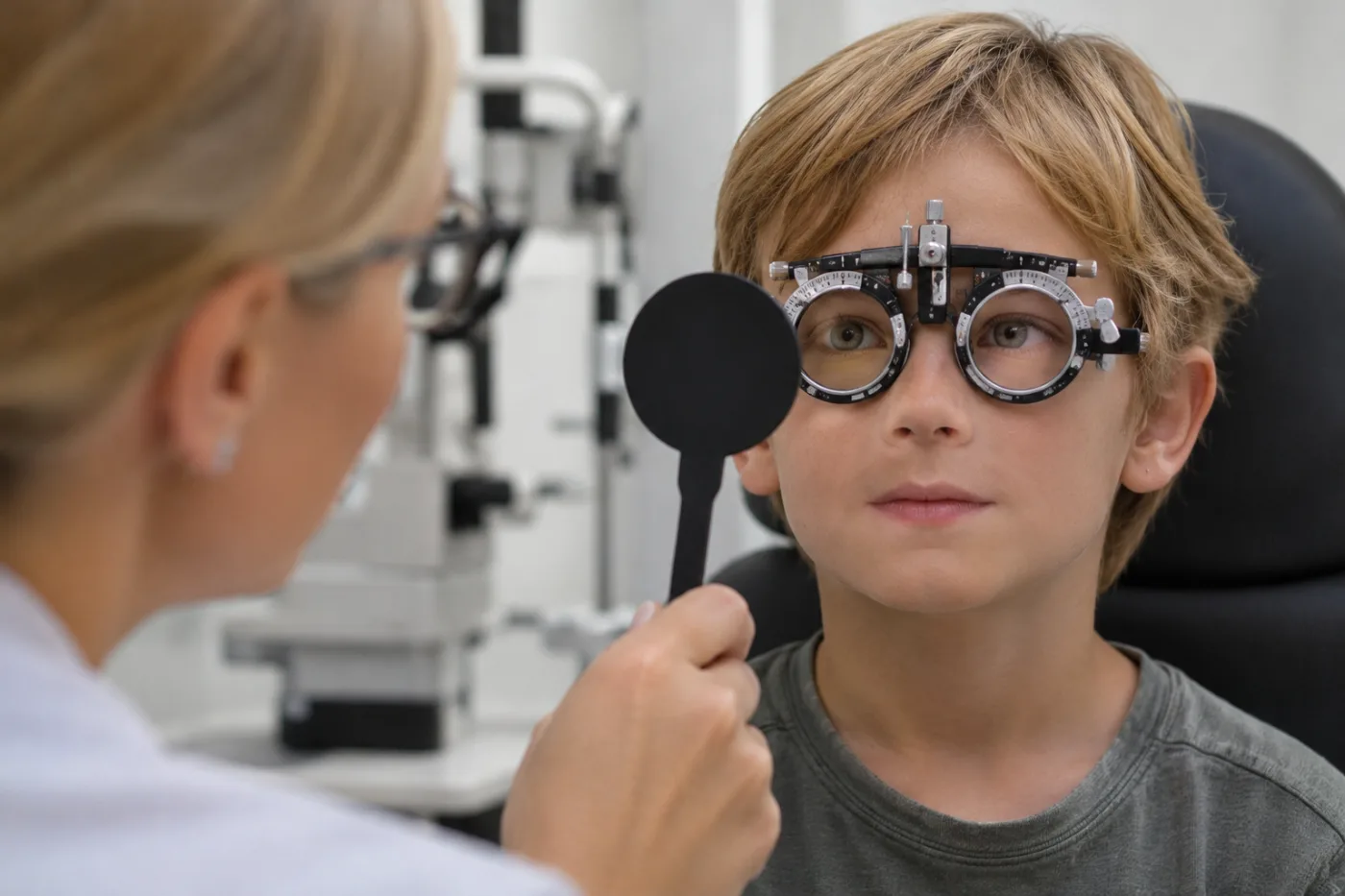
Just as a vehicle's cameras and radars require precision calibration, human eyes require expert evaluation. Many drivers accept nighttime eye strain, glare sensitivity, and blurred road signs as unavoidable facts of life, unaware that they often stem from minor uncorrected astigmatism, subtle optical mismatches, or ocular surface dryness.
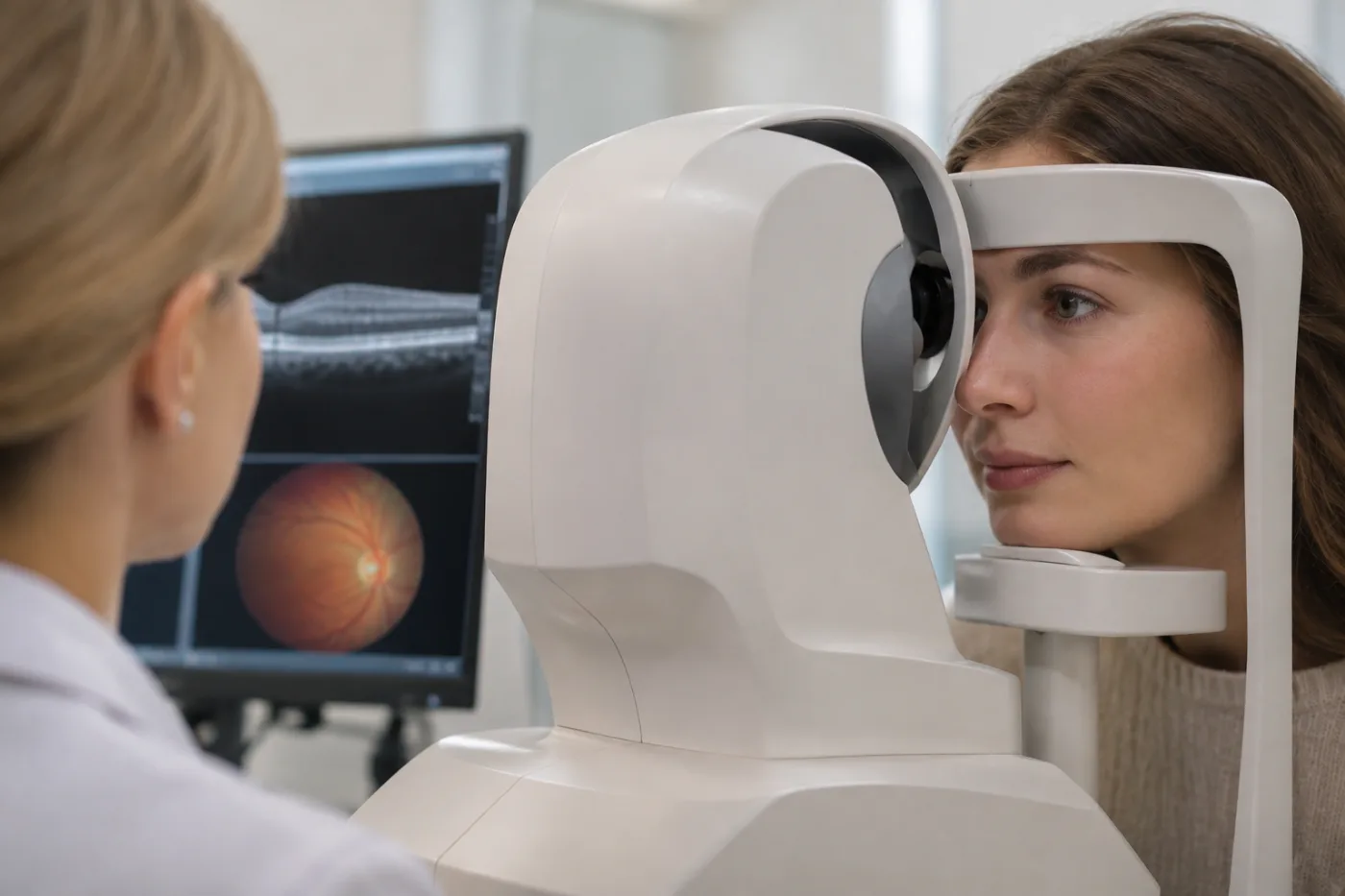
At KSA Eye Center (KSA Silmakeskus), vision diagnostics are conducted with the same cutting-edge technological rigor found in advanced automotive engineering. As part of our comprehensive Silmade Audit (Eye Audit), our specialists utilize state-of-the-art Optical Coherence Tomography (OCT). This painless, non-contact scan maps your retina and corneal architecture down to individual microns in just minutes.
Next time you take the wheel, appreciate the remarkable sensor technology protecting your car. But remember to give yourself the ultimate driving upgrade: ensure your own vision is razor-sharp, comfortable, and unhindered in every rainstorm, fog, and night drive!